India’s solar industry is expanding rapidly, and with growing installations comes an increasing need for reliable solar components. EPC companies, solar installers, distributors, contractors and commercial buyers need more than just solar panels. They require a complete range of components to design, install and maintain efficient solar power systems.
This is where solar components wholesale becomes important.
Buying components in wholesale quantities can help businesses manage project costs, maintain inventory and source multiple products from a reliable supply partner. However, choosing the right supplier is not simply about finding the lowest price. Product quality, compatibility, certifications, availability, delivery timelines and after-sales support can directly affect the success of a solar project.
For businesses operating across India, working with an experienced solar component supplier or solar EPC material supplier can make procurement considerably easier.
In this guide, we will explore what solar components include, why wholesale purchasing matters, what to look for in a supplier and how businesses can make smarter procurement decisions.
What Are Solar Components?
Solar components are the equipment and supporting materials required to build, connect, protect, monitor and operate a solar power system.
While solar panels are the most visible part of a solar installation, a complete system requires several additional components.
Common solar components include:
- Solar panels and modules
- Solar inverters
- DC cables
- AC cables
- MC4 connectors
- DCDB and ACDB
- Earthing equipment
- Lightning protection systems
- Mounting structures
- Solar junction boxes
- Fuses and circuit breakers
- Surge protection devices
- Monitoring equipment
- Solar batteries and energy storage systems
- Switchgear and electrical accessories
The exact components required depend on the project type, system capacity, installation environment and technical design.
What is solar components wholesale?
Solar components wholesale is the bulk procurement of equipment and supporting materials used in solar power installations. EPC companies, installers, distributors and solar businesses typically purchase components such as inverters, cables, connectors, ACDB, DCDB, mounting structures, protection devices and other solar equipment in larger quantities. Choosing the right supplier involves evaluating quality, compatibility, pricing, availability, delivery, warranty and technical support.
Solar components wholesale refers to purchasing solar equipment and related components in larger quantities, generally for business, EPC, installation, distribution or project requirements.
Instead of purchasing individual products for a single installation, businesses can procure components in bulk according to their upcoming project requirements.
For example, an EPC company handling multiple rooftop projects may require:
- Multiple inverter units
- Large quantities of DC cables
- ACDB and DCDB units
- MC4 connectors
- Mounting structures
- Protection devices
- Earthing accessories
A wholesale procurement model allows the company to consolidate these requirements through a suitable supplier.
Why is Wholesale Procurement Important for Solar Businesses?
For solar companies, procurement is a significant part of project planning and execution.
A reliable wholesale sourcing strategy can provide several advantages.
1. Better Cost Management
Purchasing products in larger quantities can help businesses negotiate better commercial terms compared with purchasing individual items repeatedly.
However, businesses should compare the total procurement cost, not simply the product’s unit price.
Transportation, taxes, warranty terms, replacement costs and delivery charges should also be considered.
2. Easier Project Procurement
A solar project may require dozens of different components.
Working with an experienced supplier can reduce the time spent coordinating with multiple vendors.
A capable solar equipment supplier India can potentially provide several categories of products through one procurement channel.
3. Consistent Product Quality
Using different products from multiple sources can create quality and compatibility issues.
A dependable solar component supplier can help businesses maintain greater consistency across projects.
This is particularly important for EPC companies working on multiple installations.
4. Improved Inventory Planning
Installers and distributors need products available when projects begin.
Wholesale purchasing can support inventory planning for frequently used components.
Businesses can determine which products should be stocked regularly and which should be purchased according to individual project requirements.
5. Faster Project Execution
Delayed components can delay installation.
For this reason, availability and delivery capability should be important criteria when selecting a solar material supplier India.
A supplier offering reliable stock and logistics support can help reduce procurement-related project delays.
What Solar Components Can You Buy Wholesale?
The range of wholesale solar products available in the market has expanded significantly.
Here are some of the major categories businesses commonly procure.
1. Solar Panels
Solar modules are the primary electricity-generating component of a photovoltaic system.
Businesses may source different module technologies and configurations depending on:
- Project capacity
- Roof size
- Available sunlight
- Budget
- Efficiency requirements
- Installation conditions
- Applicable technical requirements
For large projects, module selection should be based on technical suitability rather than price alone.
2. Solar Inverters
Inverters convert the electricity generated by solar modules into usable electrical power.
Depending on the application, businesses may require different inverter configurations.
When purchasing inverters wholesale, consider:
- Capacity
- Efficiency
- Compatibility
- Monitoring capabilities
- Warranty
- Installation requirements
- Manufacturer support
3. Solar Cables
Cables are essential for safely transferring electrical energy between system components.
Common requirements include DC and AC cables suitable for solar installations.
Cable selection should consider:
- Current capacity
- Voltage rating
- Environmental conditions
- Temperature resistance
- Installation method
- Cable length
- Applicable standards
4. MC4 Connectors
MC4-type connectors are commonly used for connecting solar module cables.
Although they may appear to be small components, connector quality can influence electrical reliability and installation safety.
For wholesale procurement, businesses should verify compatibility and product specifications before placing bulk orders.
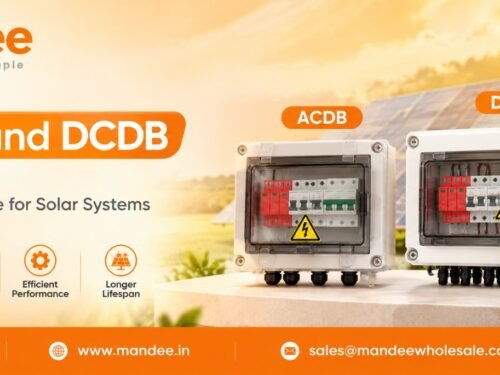
5. ACDB and DCDB
ACDB and DCDB units provide protection and switching functions within solar electrical systems.
Depending on the project design, they may include components such as:
- Circuit breakers
- Fuses
- Surge protection devices
- Isolators
- Enclosures
These products should be selected according to system specifications and project requirements.
6. Mounting Structures
Solar mounting structures secure panels to rooftops, ground installations or other suitable surfaces.
The appropriate structure depends on:
- Roof type
- Panel configuration
- Wind conditions
- Installation environment
- System design
- Material requirements
A reliable supplier should be able to provide products appropriate for the intended installation.
7. Earthing and Lightning Protection
Solar installations require suitable electrical protection measures.
Earthing and lightning protection components can form an important part of the overall system design, especially for larger installations and sites with specific environmental requirements.
8. Solar Batteries and Energy Storage Components
As energy storage adoption increases, businesses may also source batteries and related storage equipment.
The right solution depends on:
- Required backup duration
- System capacity
- Load profile
- Charging requirements
- Operating environment
- Budget
Solar Components Wholesale vs Retail Purchasing
One of the most common questions businesses have is whether they should buy components wholesale or retail.
| Factor | Wholesale Procurement | Retail Procurement |
|---|---|---|
| Purchase quantity | Generally larger | Usually smaller |
| Pricing opportunity | Better scope for bulk negotiation | Generally standard pricing |
| Ideal for | EPCs, installers, distributors | Individual/small requirements |
| Inventory planning | Stronger | Limited |
| Supplier relationship | Often long-term | May be transaction-based |
| Procurement efficiency | Higher for recurring projects | Suitable for occasional purchases |
For EPC companies and installers handling multiple projects, wholesale procurement can be more practical.
However, buying in bulk only makes sense when the products are actually required and can be stored appropriately.
How to Choose a Solar Component Supplier in India
Choosing the right solar components supplier India is one of the most important parts of procurement.
Do not evaluate suppliers solely on their quoted price.
Consider the following factors.
1. Product Range
A supplier offering multiple categories can simplify procurement.
Look for suppliers who can support your requirements for panels, inverters, electrical protection equipment, cables, connectors, mounting systems and other relevant components.
2. Product Quality
Always check product specifications, manufacturer details, applicable certifications and technical documentation where relevant.
Cheap components can become expensive if they result in failures, replacements or project delays.
3. Availability
Ask whether the supplier maintains regular stock.
For project-based businesses, availability can be just as important as price.
A solar equipment supplier with dependable inventory can help businesses plan projects more efficiently.
4. Pricing Transparency
Compare quotations carefully.
A lower headline price does not always represent the lowest total cost.
Check:
- Product price
- Taxes
- Transportation
- Packaging
- Delivery charges
- Warranty
- Payment terms
- Replacement policies
5. Delivery Capability
If you operate across multiple locations, confirm whether the supplier can deliver to your project sites.
For businesses looking for a solar equipment supplier India, logistics capability can be a major differentiator.
6. Warranty and Support
Ask about manufacturer warranty and supplier support before purchasing.
A reliable supplier should clearly explain warranty procedures and documentation requirements.
7. Technical Support
For complex EPC projects, procurement may involve technical questions.
A supplier with knowledgeable technical support can help buyers understand specifications, compatibility and product selection.
How to Get the Best Price for Solar EPC Materials in India
Many businesses search for a solar EPC material supplier best price India, but the lowest quotation should not automatically be considered the best deal.
Instead, evaluate the overall value.
Compare suppliers based on:
- Product quality
- Brand and specifications
- Bulk pricing
- Availability
- Delivery time
- Warranty
- Payment terms
- Replacement support
- Technical assistance
- Total landed cost
For recurring projects, businesses can also negotiate based on annual procurement volumes instead of negotiating every order independently.
Solar EPC Material Supplier: What Should They Offer?
An experienced solar EPC material supplier should ideally understand the requirements of EPC companies and installation contractors.
Depending on the supplier, services may include:
- Bulk procurement
- Multi-product sourcing
- Project-based quotations
- Product recommendations
- Inventory support
- Logistics coordination
- Technical documentation
- Warranty assistance
- Recurring supply arrangements
For larger EPC businesses, supplier relationships should ideally be treated as a strategic procurement partnership rather than a simple purchase transaction.
Solar Components Wholesale in India: Who Buys in Bulk?
Wholesale solar procurement is particularly relevant for:
EPC Companies
EPC companies require multiple components for residential, commercial and industrial projects.
Solar Installers
Installers frequently purchase cables, connectors, protection equipment and mounting components.
Solar Distributors
A solar distributor India may purchase products in bulk and supply them to regional installers or businesses.
Electrical Contractors
Electrical contractors working on solar projects may require specialized electrical and protection components.
Solar Dealers
Dealers can source solar products wholesale India and distribute them within their local markets.
Commercial Buyers
Large organizations may purchase components for captive, rooftop or other solar projects.
Solar Products Wholesale vs Solar Components Wholesale
The terms are closely related, but they can have slightly different meanings.
Solar products wholesale is a broader term that can cover finished solar products such as panels, inverters, batteries and complete equipment.
Solar components wholesale generally focuses on the individual equipment and supporting components required to assemble and operate solar systems.
Both can be relevant to EPC companies and installers.
A business searching for a solar products distributor may therefore have broader procurement requirements than a company specifically looking for electrical and structural components.
Can You Buy Solar Products Online?
Yes, many businesses now explore options to buy solar products online.
Online procurement can make it easier to:
- Compare product specifications
- Review product categories
- Request quotations
- Check availability
- Compare suppliers
- Submit project requirements
However, for large-value or bulk solar purchases, businesses should verify supplier credentials, product specifications, warranty terms and delivery conditions before making a purchase.
For substantial EPC requirements, requesting a customized quotation can often be more useful than relying solely on listed online prices.
What Should You Check Before Placing a Wholesale Solar Order?
Before confirming a bulk purchase, use this simple checklist.
Solar Wholesale Procurement Checklist
Product
- Is the product suitable for the project?
- Are specifications clearly mentioned?
- Is it compatible with other system components?
Supplier
- Is the supplier experienced?
- Can they provide technical information?
- Do they have dependable inventory?
Commercial
- Is the quotation transparent?
- Are taxes and delivery charges included?
- Are bulk discounts available?
- What are the payment terms?
Warranty
- What warranty applies?
- Who handles warranty claims?
- What documentation is required?
Logistics
- What is the expected delivery timeline?
- Can the supplier deliver to the project location?
- Is the material properly packaged?
This simple process can reduce procurement risks considerably.
How a Solar Wholesale Supplier Can Support EPC Growth
For an EPC company, procurement efficiency can directly influence project execution.
A dependable solar wholesale supplier can help by providing a centralized source for frequently required materials.
Instead of searching for individual suppliers for every project, an EPC business can establish a preferred supplier network.
This can result in:
Requirement Planning → Supplier Selection → Bulk Quotation → Quality Verification → Order Placement → Delivery → Installation
Over time, this approach can help businesses create a more predictable procurement process.
How to Build a Long-Term Relationship With a Solar Supplier
The best supplier relationship is not necessarily based on getting the cheapest price for every order.
Long-term partnerships can be built around:
- Consistent product quality
- Reliable delivery
- Transparent communication
- Competitive pricing
- Technical support
- Flexible procurement
- Quick issue resolution
- Predictable availability
Businesses with recurring requirements should periodically evaluate supplier performance using measurable factors such as delivery accuracy, product quality, pricing consistency and support response time.
Future of Solar Component Procurement in India
India’s solar market is moving toward increasingly organized and technology-driven procurement.
Several trends are likely to influence the solar supply chain:
Digital Procurement
Businesses are increasingly using online platforms to discover products, compare specifications and request quotations.
Larger Project Requirements
As commercial and industrial solar adoption grows, EPC companies may require larger and more diverse inventories.
Better Supply Chain Visibility
Businesses are becoming more focused on stock availability, delivery tracking and procurement planning.
Energy Storage Growth
Battery storage and related equipment are becoming increasingly relevant as solar applications evolve.
Quality-Focused Procurement
As projects become more sophisticated, buyers are likely to place greater emphasis on product quality, reliability, documentation and long-term performance rather than price alone.
Frequently Asked Questions About Solar Components Wholesale
What is solar components wholesale?
Solar components wholesale means purchasing solar equipment and supporting components in bulk, typically for EPC projects, installation businesses, distribution, resale or commercial requirements.
Which solar components can be purchased wholesale?
Common wholesale products include solar panels, inverters, cables, MC4 connectors, ACDB, DCDB, mounting structures, protection devices, earthing equipment, batteries and other solar accessories.
How do I choose a solar component supplier in India?
Compare suppliers based on product quality, specifications, availability, pricing, delivery capability, warranty, technical support and overall procurement value.
Is wholesale solar equipment cheaper?
Bulk purchasing may provide better pricing or commercial terms, but the final cost depends on product quality, quantity, logistics, taxes, warranty and other factors.
Who needs wholesale solar components?
EPC companies, solar installers, distributors, dealers, electrical contractors, project developers and commercial buyers can benefit from wholesale procurement.
Can I buy solar products online?
Yes. Businesses can research and purchase many solar products online, although bulk buyers should verify supplier credentials, specifications, warranty and delivery terms before placing large orders.
What is the difference between a solar product supplier and a solar component supplier?
A solar product supplier may offer a broad range of finished solar products, while a solar component supplier may focus more specifically on the equipment and supporting components required for solar system installation.
How can I find a reliable solar EPC material supplier in India?
Look for a supplier with a broad product portfolio, reliable inventory, competitive and transparent pricing, delivery capability, technical support and clear warranty processes.
What should EPC companies consider before buying solar components wholesale?
EPC companies should evaluate technical specifications, compatibility, quality, supplier reliability, pricing, availability, delivery timelines, warranty and after-sales support.
Key Takeaways
The solar industry depends on more than solar panels. A successful installation requires a reliable ecosystem of components, equipment and supporting materials.
For EPC companies, installers and distributors, solar components wholesale can make procurement more organized and potentially more cost-efficient.
The most important factors to consider when selecting a supplier are:
- Product quality
- Technical specifications
- Product availability
- Bulk pricing
- Delivery capability
- Warranty
- Technical support
- Total procurement cost
Rather than choosing a supplier based only on the cheapest quotation, businesses should focus on quality, reliability and long-term value.
A dependable solar material supplier India or solar EPC material supplier India can become an important part of a company’s project execution and procurement strategy.