Introduction
India’s solar industry is creating new opportunities for businesses involved in solar installations, EPC projects, distribution, and renewable energy procurement. Whether you are a solar EPC contractor, a local solar dealer, or a company managing commercial rooftop projects, having access to the right solar products at the right time is essential.
But sourcing solar equipment is not always as simple as buying solar panels. A complete solar project may require modules, inverters, mounting structures, cables, connectors, protection devices, batteries, and other components. Managing multiple suppliers for every item can make procurement complicated, increase coordination work, and affect project timelines.
This is where a B2B solar distributor in India can make a difference.
A reliable B2B solar distributor helps businesses source solar products, solar components, and EPC materials in suitable quantities, with dependable supply, product documentation, and commercial support.
In this guide, we will explore what a B2B solar distributor does, the types of solar products available through wholesale channels, how to choose the right supplier, and why partnering with a dependable solar material supplier can support business growth.
What is a B2B Solar Distributor in India?
A B2B solar distributor in India is a business that supplies solar products and related equipment to other businesses rather than primarily selling to individual consumers.
These distributors may supply products to:
- Solar EPC companies.
- Solar installation contractors.
- Solar panel dealers and resellers.
- Solar project developers.
- Electrical contractors.
- Industrial and commercial solar buyers.
- Renewable energy businesses.
- Solar product retailers.
A B2B solar distributor may operate as a wholesale supplier, authorized channel partner, stockist, or multi-brand solar equipment distributor, depending on its business model.
The main purpose is to make solar procurement easier for businesses by providing access to products, commercial quantities, and supply-chain support.
How Does a B2B Solar Distributor Work?
The process generally follows this model:
- Business requirementAn EPC company or dealer identifies the solar products and quantities needed.
- Supplier quotationThe distributor shares product specifications, availability, pricing, and delivery details.
- Order confirmationThe buyer confirms the products, quantities, commercial terms, and dispatch requirements.
- Product supplyThe distributor arranges the required solar equipment and delivers it according to the agreed terms.
- Project executionThe buyer uses the materials for solar installation, EPC work, resale, or other business requirements.
This model helps businesses focus on their core operations while simplifying solar material procurement.
Why is a B2B Solar Distributor Important for Solar Businesses?
Solar businesses often need multiple products from different categories. A single project may involve technical specifications, procurement deadlines, transportation, and coordination with several vendors.
Working with an experienced solar products supplier can help streamline these activities.
1. Access to a Wide Range of Solar Products
A well-established solar distributor may offer a broad portfolio of solar equipment, including:
- Solar panels and modules.
- Solar inverters.
- Solar batteries and energy storage products.
- Mounting structures.
- Solar DC and AC cables.
- MC4-compatible connectors.
- DCDB and ACDB.
- Earthing and lightning protection products.
- Solar installation accessories.
The exact product range depends on the supplier and its brand partnerships.
Having multiple product categories available through one supplier can reduce the need to coordinate with several vendors.
2. Wholesale Procurement for Businesses
B2B buyers often require products in quantities suitable for installations, dealership inventory, or project execution.
A solar products wholesale supplier can help businesses source materials in commercial quantities. Depending on the supplier’s stock and commercial policy, buyers may request:
- Bulk product quotations.
- Project-specific pricing.
- Dealer or reseller rates.
- Repeat-order arrangements.
- Delivery schedules.
- Product availability updates.
Wholesale purchasing does not automatically guarantee the lowest price. Businesses should compare the complete cost, including freight, taxes, warranty terms, and other applicable charges.
3. Support for Solar EPC Projects
Solar EPC companies need more than individual components. They need materials that work together within a complete project.
A solar EPC material supplier may support procurement for:
- Residential rooftop solar.
- Commercial rooftop installations.
- Industrial solar projects.
- Ground-mounted solar systems.
- Solar pumping applications.
- Solar power infrastructure.
- Commercial and industrial electrical work associated with solar projects.
A supplier with experience in EPC procurement can help buyers identify the materials needed for their project scope.
4. Reduced Procurement Complexity
Buying every component from a different supplier can create additional coordination work.
A solar material supplier with multiple product categories may simplify the purchasing process by offering a more consolidated procurement route.
However, the buyer should still verify whether the supplier can provide all required items, meet project deadlines, and support the technical specifications.
Types of Solar Products Available from B2B Distributors
A B2B solar distributor India business may supply a wide range of products for solar installations and related applications.
Below are the major categories businesses should understand before placing an order.
1. Solar Panels and Modules
Solar panels are among the most important components of a photovoltaic system. They convert sunlight into electrical energy.
Common procurement considerations include:
- Module technology and specifications.
- Rated power output.
- Module dimensions and weight.
- Efficiency.
- Warranty documentation.
- Applicable certifications and compliance.
- Packaging and transportation.
- Availability for project requirements.
A solar products supplier should provide accurate product information and help buyers understand which module specifications suit their application.
2. Solar Inverters
Solar inverters convert the electricity generated by solar panels into a form suitable for the intended electrical system.
Depending on the project, buyers may consider:
- On-grid inverters.
- Off-grid inverters.
- Hybrid inverters.
- String inverters.
- Other inverter types suitable for specific applications.
Businesses should select inverters based on system design, capacity, compatibility, operating conditions, and applicable requirements.
3. Solar Mounting Structures
Mounting structures support solar panels and help position them securely.
Typical products include:
- Rooftop mounting structures.
- Ground-mount structures.
- Rails and clamps.
- Mounting brackets.
- Fasteners.
- Structure accessories.
The appropriate structure depends on the roof or ground conditions, panel configuration, wind considerations, and project design.
4. Solar Cables and Connectors
Solar cables and connectors help establish electrical connections between system components.
Common products include:
- Solar DC cables.
- AC cables for suitable applications.
- PV connectors.
- Cable clips and accessories.
- Cable management products.
A solar component supplier should provide product specifications suitable for the electrical application. Cable size, insulation, environmental suitability, and connector compatibility are important procurement considerations.
5. DCDB, ACDB, and Protection Equipment
Protection and distribution equipment is used to support electrical safety and system management.
Depending on the design, solar EPC material suppliers may provide:
- DC distribution boxes.
- AC distribution boxes.
- Fuses.
- Surge protection devices.
- Isolators.
- MCBs and related protection equipment.
- Enclosures and accessories.
These components should be selected according to the system design and applicable electrical standards.
6. Solar Batteries and Energy Storage Products
Energy storage products can be used in systems that require backup power or energy storage.
Potential product categories include:
- Lithium-based battery systems.
- Lead-acid batteries.
- Solar storage solutions.
- Battery accessories.
- Compatible charge controllers and related equipment.
Not every solar distributor stocks every battery technology. Buyers should confirm compatibility, warranty terms, storage requirements, and installation specifications.
Solar Products Wholesale India: What Should Businesses Know?
The solar products wholesale market in India serves businesses that purchase solar equipment for resale, installation, or project execution.
A solar products wholesale India supplier may offer different purchasing options depending on the type of buyer.
Wholesale Buying for Different Business Types
| Buyer Type | Common Procurement Requirement |
|---|---|
| Solar EPC company | Panels, inverters, structures, cables, and electrical materials |
| Solar installer | Rooftop solar equipment and installation accessories |
| Solar dealer | Products for resale to customers |
| Solar distributor | Inventory for regional distribution |
| Industrial buyer | Equipment for captive, rooftop, or industrial solar projects |
| Electrical contractor | Solar-related electrical and protection components |
| Project developer | Bulk materials aligned with project requirements |
Is Buying Solar Products Wholesale Cheaper?
Wholesale procurement may offer commercial advantages, but the final price depends on several factors:
- Order volume.
- Product brand and specifications.
- Availability.
- Freight and delivery location.
- Taxes and applicable charges.
- Warranty and after-sales support.
- Payment terms.
- Market conditions.
For this reason, businesses should compare total procurement cost, not just the quoted product price.
A supplier offering the lowest initial price may not provide the most suitable commercial outcome if the product is unavailable, delivery is delayed, or warranty support is unclear.
How to Choose the Right Solar Products Supplier in India
Choosing a reliable solar products supplier is an important decision for any business involved in solar installation or distribution.
The right supplier should align with your product requirements, quality expectations, budget, and project timelines.
1. Check the Product Range
Before selecting a supplier, identify whether they supply the products you regularly need.
For example:
- Solar modules.
- Inverters.
- Mounting structures.
- Solar cables.
- Connectors.
- Electrical protection equipment.
- Batteries.
- Other solar EPC materials.
A supplier with a suitable product portfolio can reduce the need to source every category separately.
2. Verify Product Quality and Documentation
Product quality is essential for solar installations and long-term system performance.
Ask the supplier for relevant documentation, such as:
- Product datasheets.
- Manufacturer information.
- Applicable test reports.
- Warranty documentation.
- Relevant certifications and compliance documents.
- Installation manuals where applicable.
The required documents vary by product and project.
3. Evaluate Wholesale Pricing
A solar wholesale supplier should be able to provide a clear quotation.
Compare:
- Product price.
- Quantity and unit of measurement.
- Taxes.
- Freight.
- Delivery charges.
- Payment terms.
- Warranty coverage.
- Applicable discounts.
If you are searching for a solar EPC material supplier best price India, remember that a useful comparison includes quality, delivery, and total cost—not only the headline price.
4. Check Stock Availability
A supplier may have an extensive product catalogue but limited inventory.
Before placing a bulk order, ask:
- Is the product currently available?
- What quantity is in stock?
- What is the expected dispatch date?
- Is the product sourced against an order?
- Can the supplier support repeat requirements?
Stock availability is particularly important for time-sensitive EPC projects.
5. Assess Delivery and Logistics
India’s geography means delivery requirements can vary significantly between locations.
A dependable solar material supplier should communicate clearly about:
- Dispatch timelines.
- Delivery location coverage.
- Packaging.
- Freight arrangements.
- Damage handling.
- Order tracking.
- Bulk shipment coordination.
For fragile or bulky solar products, transportation arrangements can affect procurement cost and delivery efficiency.
6. Look for Technical and Commercial Support
Solar businesses often need assistance understanding product compatibility and procurement requirements.
A solar equipment supplier may offer support related to:
- Product selection.
- Datasheets.
- Technical specifications.
- Product alternatives.
- Quotation preparation.
- Bulk order coordination.
The scope of support depends on the supplier’s team and business model.
7. Verify Business Credentials
Before finalizing a long-term supplier, check relevant business information, including:
- Company details.
- GST and invoicing information, where applicable.
- Manufacturer or brand relationships.
- Product authenticity.
- Warranty process.
- Customer references, where available.
- Terms and conditions.
A transparent supplier makes it easier for businesses to build a dependable procurement relationship.
Solar Equipment Supplier India: What Products Should You Compare?
When looking for a solar equipment supplier India businesses can rely on, it is useful to compare suppliers across product categories.
| Equipment Category | What to Check |
|---|---|
| Solar panels | Rated capacity, technology, dimensions, warranty |
| Inverters | Capacity, compatibility, efficiency, warranty |
| Mounting structures | Material, design, corrosion protection, suitability |
| Solar cables | Size, insulation, ratings, application |
| Connectors | Compatibility, specifications, quality |
| DCDB / ACDB | Configuration, protection devices, enclosure |
| Batteries | Chemistry, capacity, warranty, compatibility |
| Installation accessories | Product quality, dimensions, application |
A complete product comparison helps businesses make informed procurement decisions.
Solar Component Supplier India: Why Component Compatibility Matters
Solar projects depend on multiple components working together. Buying individual products without checking compatibility can create installation challenges.
For example:
- The inverter must be suitable for the intended solar system.
- Connectors must be compatible with the relevant cable and equipment.
- Mounting structures must suit the module dimensions and installation surface.
- Protection equipment must match the electrical design.
- Batteries must be compatible with the intended energy storage system.
A solar component supplier India business should ideally provide accurate product specifications so buyers can assess compatibility before purchase.
Practical tip: Share your project requirements or bill of materials with the supplier before asking for a final quotation. This can help reduce specification errors and unnecessary product substitutions.
Solar EPC Material Supplier India: Supporting Project Procurement
Solar EPC companies are responsible for coordinating various aspects of a solar project, from planning and procurement to installation and commissioning.
A solar EPC material supplier India businesses choose should understand the importance of timely and coordinated material supply.
What Materials Are Commonly Needed for Solar EPC Projects?
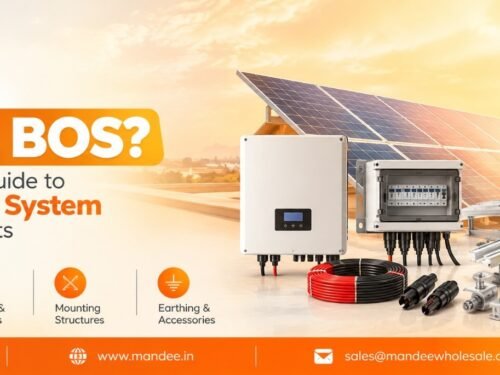
The exact bill of materials varies by project, but may include:
Solar EPC procurement checklist
Solar modules
Inverters
Mounting structures
DC/AC cables
Connectors
DCDB / ACDB
Earthing materials
Installation accessories
Benefits of Working With an EPC Material Supplier
A supplier that understands EPC requirements may help businesses with:
- Coordinating multiple material categories.
- Preparing quotations based on project quantities.
- Checking product availability.
- Supporting repeat procurement.
- Providing relevant product documentation.
- Coordinating bulk dispatches.
However, the supplier’s actual capabilities should be verified before relying on them for a project.
Solar Material Supplier India: How to Get the Best Value
Businesses looking for a solar material supplier India should focus on balancing price, quality, supply reliability, and service.
Compare More Than the Product Price
Suppose two suppliers offer the same broad category of solar equipment. One offers a lower quoted price, while another offers clearer documentation, better delivery coordination, and suitable warranty support.
The lower quote may not always represent the lower overall procurement cost.
Consider the following:
- Product cost.
- Freight and handling.
- Delivery timeline.
- Warranty.
- Product specifications.
- Replacement process.
- Payment terms.
- Supplier responsiveness.
Ask for a Detailed Quotation
A detailed quotation should ideally include:
- Product name.
- Brand and model.
- Technical specifications.
- Quantity.
- Unit price.
- Applicable taxes.
- Freight charges.
- Delivery terms.
- Warranty information.
- Payment conditions.
- Quotation validity.
This helps businesses compare offers more accurately.
Solar Distributor India vs Solar Products Supplier: What is the Difference?
The terms solar distributor, solar supplier, and solar products distributor are often used interchangeably, but they can represent different business roles.
| Term | General Meaning |
|---|---|
| Solar products supplier | A business that supplies solar products to buyers |
| Solar distributor | A business involved in distributing products through a supply network |
| Solar products distributor | A distributor specializing in solar equipment and components |
| Solar wholesale supplier | A supplier focused on commercial or bulk purchasing |
| Solar equipment supplier | A business supplying solar equipment, often including technical products |
| Solar EPC material supplier | A supplier serving EPC-related material requirements |
The exact responsibilities depend on the company’s business model. Some businesses may operate across several of these categories.
How Can Solar Dealers and EPC Companies Benefit From a Long-Term Distributor?
A consistent supplier relationship can help businesses streamline procurement over time.
For Solar Dealers
A solar distributor India dealers choose may help with:
- Product availability.
- Wholesale pricing.
- Inventory planning.
- Product information.
- Repeat orders.
- Customer project requirements.
For Solar EPC Companies
A solar EPC material supplier may support:
- Project-based procurement.
- Bulk quotations.
- Material coordination.
- Delivery planning.
- Technical documentation.
- Repeat project requirements.
For Solar Resellers and Distributors
A solar products distributor can help businesses source products for resale, depending on the supplier’s channel policy.
A long-term relationship works best when both parties communicate clearly about pricing, availability, payment terms, and delivery expectations.
How to Buy Solar Products Online in India
The growth of online business procurement has made it easier for buyers to explore solar products, compare specifications, and request quotations.
However, buying solar products online for a B2B project requires more than selecting an item and checking out.
Step-by-Step Process
1. Identify your requirement
Prepare the product list, quantities, specifications, and delivery location.
2. Find a suitable supplier
Search for a solar products supplier, solar distributor, or solar wholesale supplier that serves your business category.
3. Request a quotation
Ask for pricing, specifications, availability, delivery, and warranty details.
4. Verify the products
Check model numbers, product documents, supplier credentials, and applicable project requirements.
5. Confirm the order
Finalize commercial terms and delivery arrangements before placing the order.
Is Buying Solar Products Online Suitable for B2B Buyers?
Yes, online procurement can be useful for B2B buyers, particularly for product discovery, quotation requests, and repeat purchasing.
For large or technically complex orders, buyers should confirm product specifications and commercial terms directly with the supplier before finalizing the purchase.
What Makes a Reliable B2B Solar Distributor in India?
A reliable distributor is not defined only by the number of products listed on a website.
Businesses should evaluate the supplier based on the requirements of their own procurement process.
Important Qualities to Look For
- Product range: Suitable solar products and components.
- Transparency: Clear quotations and business information.
- Quality documentation: Relevant datasheets and warranty details.
- Availability: Accurate stock and dispatch information.
- Commercial clarity: Understandable payment and delivery terms.
- Communication: Responsive support for business enquiries.
- Project understanding: Ability to handle relevant EPC or bulk requirements.
- After-sales process: Clear procedure for applicable warranty claims.
The right supplier will depend on the buyer’s location, product category, order size, and technical requirements.
B2B Solar Distributor India: Questions to Ask Before Placing a Bulk Order
Before making a procurement decision, ask the supplier:
- Which solar product brands and categories do you supply?
- Do you support wholesale and bulk orders?
- Can you supply products for solar EPC projects?
- Are the required models currently in stock?
- What are the minimum order quantities, if any?
- Can you provide product datasheets and warranty documents?
- What are the delivery charges and estimated dispatch timelines?
- Do you support orders outside your home city or state?
- What are the payment terms?
- What is the process for damaged goods or warranty claims?
These questions can help businesses compare suppliers and avoid unnecessary procurement problems.
Why Businesses Should Partner With a Solar Products Distributor
For businesses working in the renewable energy sector, procurement is an ongoing activity rather than a one-time purchase.
A solar products distributor may become a useful long-term partner when it consistently meets the buyer’s requirements.
Key Advantages
Better procurement coordination: Access to multiple product categories through one supplier.
Bulk purchasing support: Suitable quotations and commercial terms for business requirements.
Project planning: Improved visibility into product availability and delivery timelines.
Product information: Access to relevant specifications and documentation.
Business continuity: A dependable supply relationship can help support repeat orders.
Scalable sourcing: Businesses can evaluate whether the supplier can meet changing procurement needs as projects grow.
These benefits are potential advantages, not automatic guarantees. Supplier performance should be assessed through actual experience and clear commercial agreements.
Frequently Asked Questions (FAQs)
1. What is a B2B solar distributor in India?
A B2B solar distributor in India supplies solar products and related equipment to businesses such as EPC companies, installers, dealers, and commercial buyers. The distributor may provide wholesale products, project materials, and procurement support.
2. What products can I buy from a solar products supplier?
You can commonly source solar panels, inverters, mounting structures, solar cables, connectors, DCDB, ACDB, batteries, and other solar installation accessories. The available product range depends on the supplier.
3. Where can I find a solar products wholesale supplier in India?
You can search online for a solar products wholesale supplier, solar equipment supplier India, or B2B solar distributor India. Compare product range, quality, pricing, availability, delivery, and warranty terms before selecting a supplier.
4. Can a solar EPC material supplier provide complete project materials?
Some solar EPC material suppliers provide multiple product categories that may support a complete project bill of materials. However, the exact scope depends on the supplier’s inventory, product portfolio, and project requirements.
5. How do I choose the best solar distributor India for my business?
The right distributor depends on your business requirements. Compare product quality, pricing, availability, documentation, delivery capabilities, technical support, and warranty terms. Avoid choosing a supplier based only on the lowest quotation.
6. Is wholesale solar products procurement cheaper?
Wholesale procurement may provide commercial benefits, especially for larger orders. However, actual savings depend on product specifications, quantity, freight, taxes, payment terms, and supplier pricing. Compare the total landed cost.
7. Can I buy solar products online in India?
Yes, many solar businesses use online platforms to explore solar products and request quotations. For bulk or technically complex orders, verify the product specifications, supplier credentials, and delivery terms before confirming the purchase.
8. What should I check before buying solar components wholesale?
Check product specifications, compatibility, manufacturer information, quality documents, warranty, quantity, availability, delivery, and total cost. Confirm that the components suit your intended application.
9. What is the difference between a solar supplier and a solar distributor?
A solar supplier provides products to buyers, while a distributor generally operates within a product distribution network. A business can perform both roles. The exact difference depends on its business model.
10. How can I get the best price from a solar EPC material supplier in India?
To request competitive pricing, share your product list, quantities, required specifications, and delivery location. Ask for a detailed quotation that includes taxes, freight, delivery, and applicable warranty terms. Compare equivalent products and complete costs.
11. Do solar distributors supply products for industrial solar projects?
Some solar distributors supply equipment for industrial and commercial solar projects. Confirm the supplier’s product range, capacity to handle bulk orders, technical specifications, and delivery capabilities.
12. What makes a good solar component supplier India?
A good supplier for your needs should offer suitable products, transparent pricing, accurate documentation, dependable communication, and terms aligned with your procurement requirements. Product authenticity and compatibility are also important.
Conclusion: Finding the Right B2B Solar Distributor India
The solar industry offers opportunities for businesses involved in EPC, installation, distribution, and renewable energy procurement. As project requirements grow, having a reliable source of solar products and materials becomes increasingly important.
A suitable B2B solar distributor India can help businesses explore wholesale solar products, source solar components, manage project procurement, and simplify the buying process.
Whether you are looking for a solar products supplier, solar equipment supplier India, solar material supplier, or solar EPC material supplier India, focus on product quality, availability, pricing transparency, technical suitability, and delivery support.
The right solar distribution partner is one that matches your business requirements and helps you procure the materials you need with clarity and confidence.