For solar installers, having the right equipment at the right time can make the difference between a smooth project and a delayed installation.
Solar panels may get most of the attention, but a complete installation requires much more: inverters, DCDBs, ACDBs, solar cables, connectors, mounting structures, earthing equipment, protection devices and other balance-of-system components.
That is why choosing a dependable solar equipment supplier for installers is not simply about finding the lowest price. Installers need suppliers who can offer the right products, consistent quality, competitive pricing, reliable availability and responsive support.
Whether you handle residential rooftops, commercial installations or larger EPC projects, this guide explains how to evaluate a solar equipment supplier in India and build a reliable procurement process.
Quick Answer: How Should Installers Choose a Solar Equipment Supplier?
Installers should choose a supplier based on product quality, technical specifications, availability, pricing, warranty, delivery, documentation and after-sales support.
Before finalizing a supplier, check:
- Product range and availability
- Manufacturer and product quality
- Technical specifications
- Compatibility between components
- Bulk and project pricing
- Warranty terms
- Delivery timelines
- Product documentation
- After-sales support
- Supplier reputation and reliability
The best supplier is not necessarily the cheapest supplier. It is the one that provides the right equipment at the right quality, price and time.
What Does a Solar Equipment Supplier Do?
A solar equipment supplier provides the products and components required to install and operate solar PV systems.
Depending on the supplier, the product portfolio may include:
- Solar panels
- Solar inverters
- ACDB
- DCDB
- Solar cables
- Connectors
- Mounting structures
- Earthing equipment
- Lightning protection
- Solar monitoring equipment
- Batteries and storage equipment
- Other electrical and balance-of-system components
Some suppliers specialize in one category, while others provide a wider range of solar products for installers and EPC companies.
For an installer, a supplier with a broad and reliable product portfolio can simplify procurement and reduce the need to coordinate with multiple vendors.
Why Is the Right Supplier Important for Solar Installers?
Solar installation is highly dependent on coordination.
Even if an installer has completed the site survey and finalized the design, the project can be delayed if a critical component is unavailable.
A reliable supplier can help installers with:
Consistent Product Availability
Installers need equipment when the project is ready for execution. Stock availability can therefore be an important consideration.
Competitive Pricing
Installers work with project budgets and need commercially viable procurement options.
Technical Information
Datasheets and specifications help installers verify whether a product is appropriate for the intended application.
Faster Procurement
Working with an established supplier can reduce the time spent searching for individual components.
Warranty Support
A clear warranty and replacement process can make post-installation support easier.
Delivery Capability
For installers handling projects in different locations, dependable logistics are particularly valuable.
What Solar Equipment Do Installers Typically Need?
A typical solar installation requires several categories of equipment.
1. Solar Panels
Solar panels convert sunlight into DC electricity and are one of the primary components of a PV system.
Installers should compare:
- Module technology
- Rated power
- Efficiency
- Dimensions
- Electrical characteristics
- Warranty
- Product documentation
- Compatibility with the system design
2. Solar Inverters
The inverter converts DC electricity from the PV array into AC electricity.
Depending on the application, installers may work with:
- String inverters
- Central inverters
- Microinverters
- Hybrid inverters
The appropriate inverter depends on project size, system architecture, electrical requirements and application.
3. ACDB and DCDB
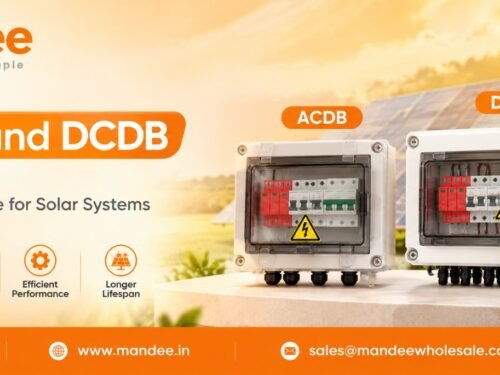
ACDB (Alternating Current Distribution Box) is used on the AC side of the system, while DCDB (Direct Current Distribution Box) is used on the DC side, depending on the system design.
These components can provide functions such as:
- Circuit protection
- Isolation
- Surge protection
- Power distribution
Installers should ensure the protection equipment is correctly rated for the project’s electrical characteristics.
4. Solar Cables
Solar installations require appropriate DC and AC cabling.
The cable selection depends on factors such as:
- Current
- Voltage
- Cable length
- Installation method
- Environmental conditions
- Applicable electrical requirements
5. Mounting StructuresMounting structures secure solar modules to the installation surface.
Depending on the project, installers may require structures for:
- RCC rooftops
- Metal rooftops
- Ground-mounted systems
- Commercial rooftops
- Different roof orientations
6. Connectors and Accessories
Reliable connections are essential to a properly installed PV system.
Installers may require:
- PV connectors
- Cable clips
- Cable glands
- Junction components
- Terminals
- Earthing accessories
- Cable management products
How to Choose the Best Solar Equipment Supplier for Installers
There is no universal “best” supplier for every installer.
The right supplier depends on your project type, location, volume, product requirements and service expectations.
Here are the key factors to consider.
1. Eval
uate the Product Range
If your supplier can provide multiple categories of solar equipment, procurement becomes simpler.
For example, an installer may be able to source:
Solar Panels + Inverter + ACDB + DCDB + Cables + Mounting Structure + Accessories
from the same supplier or procurement platform.
A wider product range can be particularly useful for installers managing multiple projects simultaneously.
2. Check Product Quality
Product quality should be evaluated before price.
Ask for:
- Technical datasheets
- Product specifications
- Applicable certifications
- Test reports where relevant
- Warranty documentation
- Manufacturer details
Don’t assume that two products with the same basic rating are identical.
Construction quality, protection features, component selection and manufacturer support can differ.
3. Verify Technical Compatibility
This is especially important when purchasing multiple components.
For example:
Solar Panel → Inverter → DC Protection → AC Protection
must be considered as part of one system.
Installers should verify:
- Voltage compatibility
- Current ratings
- Connector compatibility
- Inverter input requirements
- Protection-device ratings
- Cable requirements
- System configuration
A supplier should provide accurate specifications so installers can make informed decisions.
4. Compare Pricing
Pricing matters, particularly for installers working with competitive project quotations.
However, don’t compare only the product’s listed price.
Consider:
Product Price + Freight + Taxes + Installation Compatibility + Warranty + Support
A slightly more expensive product may offer better value if it provides stronger warranty support, better availability or fewer procurement problems.
5. Look for Reliable Stock Availability
For installers, stock availability can be as important as price.
Before placing an order, confirm:
- Current stock
- Quantity available
- Expected replenishment
- Dispatch timeline
- Delivery location
- Lead time for bulk orders
This is particularly important when working against committed project completion dates.
6. Evaluate Delivery Capability
A supplier may have the right product at the right price but still create problems if delivery is unreliable.
Ask:
- Where does the supplier deliver?
- What is the typical dispatch time?
- Can they handle bulk orders?
- Is tracking available?
- How are damaged products handled?
For installers operating across India, dependable logistics can become a major supplier-selection factor.
7. Understand Warranty Support
Before buying solar equipment, understand the warranty—not just its duration.
Check:
- Warranty period
- Covered components
- Claim procedure
- Replacement procedure
- Service location
- Response process
- Conditions and exclusions
For installers, a straightforward warranty process can make customer support significantly easier.
8. Check After-Sales Support
Solar equipment can require technical assistance during installation or operation.
A good supplier should have a clear process for handling:
- Product queries
- Installation questions
- Warranty claims
- Replacement requests
- Technical documentation
Strong after-sales support can be especially valuable for installers building long-term customer relationships.
Solar Products Supplier vs Solar Equipment Supplier
The terms solar products supplier and solar equipment supplier are often used interchangeably, but their scope can vary.
A solar products supplier may provide a broad range of products, including electrical, mounting and accessory categories.
A solar equipment supplier may focus more specifically on system hardware and technical equipment.
For installers, the terminology matters less than the supplier’s actual capabilities.
The key questions are:
What products can they supply?
Are those products technically suitable?
Can they supply them consistently?
Do they offer competitive commercial terms and support?
Solar Products Wholesale for Installers
Installers handling multiple projects may benefit from solar products wholesale procurement.
Buying in larger quantities can provide opportunities to negotiate:
- Bulk pricing
- Project-specific rates
- Volume discounts
- Better payment terms
- Consolidated delivery
When comparing solar products wholesale India suppliers, evaluate the complete commercial package rather than focusing only on the per-unit price.
Solar Components Wholesale: What Should Installers Consider?
Installers often need smaller components in large quantities.
These may include:
- DC cables
- AC cables
- Connectors
- DCDBs
- ACDBs
- Mounting accessories
- Earthing components
- Cable management accessories
When sourcing solar components wholesale, consider:
- Product specifications
- Quantity requirements
- Unit pricing
- MOQ
- Stock availability
- Delivery costs
- Product quality
- Warranty where applicable
A reliable solar component supplier should be able to clearly communicate these details.
How to Find a Solar Component Supplier in India
When looking for a solar components supplier India, start by preparing a clear Bill of Materials (BOM).
Your BOM can include:
| Category | Example Requirements |
|---|---|
| Solar Panels | Quantity, wattage, technology |
| Inverter | Capacity, type, quantity |
| DCDB | Inputs, outputs, voltage rating |
| ACDB | Current, voltage, phase |
| Cables | Type, size, length |
| Mounting | Structure type and quantity |
| Connectors | Quantity and compatibility |
| Earthing | Required components |
| Accessories | Project-specific requirements |
Send the same requirement to multiple suppliers. This makes supplier comparison much easier.
Solar EPC Material Supplier for Installers
Installers working on larger residential, commercial or industrial projects may need a broader procurement partner.
A solar EPC material supplier can help source multiple components required for project execution.
When evaluating a solar EPC material supplier India, check whether the supplier can provide:
- Solar panels
- Inverters
- ACDB/DCDB
- Cables
- Mounting structures
- Electrical protection equipment
- Connectors
- Other balance-of-system materials
This can help installers reduce the complexity of sourcing individual products from multiple vendors.
How to Get the Best Price from a Solar EPC Material Supplier in India
Many installers search for a solar EPC material supplier best price India.
But the best price should be understood as the best overall procurement value, not simply the lowest quotation.
Ask suppliers for a complete quotation that includes:
- Product price
- Quantity
- Applicable taxes
- Freight
- Delivery timeline
- Warranty
- Payment terms
- Bulk discount
- Replacement terms
Then compare suppliers on a like-for-like basis.
Solar Material Supplier India: Build a Reliable Supply Chain
Installers should ideally develop relationships with multiple reliable sources rather than depending on one supplier for every project.
A strong procurement network might include:
Manufacturer → Distributor → Wholesale Supplier → Installer
Depending on the product and business model, installers can source through different levels of the supply chain.
Having backup suppliers can help when:
- A product is out of stock
- Project requirements change
- Delivery is delayed
- Prices fluctuate
- A particular product is discontinued
Solar Distributor India vs Wholesale Supplier
A solar distributor India typically supplies products through a manufacturer’s distribution network.
A solar wholesale supplier generally focuses on supplying products in larger quantities to businesses.
An installer may work with either one depending on:
- Order volume
- Product availability
- Pricing
- Location
- Brand requirements
- Delivery
- Support
There is no single procurement model that works for every installer.
Can Installers Buy Solar Products Online?
Yes. Online B2B marketplaces can make it easier to discover and compare solar products, suppliers and wholesale options.
If you want to buy solar products online, however, don’t select a product solely because it has the lowest displayed price.
Before ordering, verify:
- Product model
- Manufacturer
- Technical specifications
- Quantity
- MOQ
- Warranty
- Supplier information
- Stock availability
- Delivery terms
- Applicable documentation
For larger orders, request a formal quotation and confirm the complete commercial terms before placing the order.
What Makes a Good Solar Products Distributor?
A reliable solar products distributor should ideally offer:
Product Availability
Frequently required products should be available or have predictable lead times.
Product Authenticity
The source and manufacturer should be clearly identifiable.
Competitive Pricing
Pricing should be appropriate for the order volume and market conditions.
Technical Documentation
Products should have sufficient specifications for evaluation and installation.
Logistics
The distributor should have dependable dispatch and delivery capabilities.
Support
There should be a clear process for technical queries and warranty-related issues.
Common Mistakes Installers Should Avoid
1. Choosing the Supplier Only on Price
Low-cost equipment can become expensive if it causes compatibility, quality or warranty problems.
2. Ordering Without Checking Specifications
Always verify the actual product model and technical ratings.
3. Ignoring Stock Availability
A supplier’s ability to deliver on time matters.
4. Buying Incompatible Components
Panels, inverters, cables and protection devices must work together as part of the system design.
5. Not Checking Warranty Terms
Understand how warranty claims and replacements work before purchase.
6. Ordering Without a BOM
A project-specific Bill of Materials reduces procurement errors.
7. Depending on a Single Supplier
Maintaining alternative sources can improve procurement resilience.
Solar Equipment Procurement Checklist for Installers
Use this checklist before finalizing a supplier.
Product
- Correct product category
- Correct model
- Technical specifications verified
- Manufacturer identified
- Documentation received
- Warranty confirmed
Supplier
- Supplier credibility checked
- Stock availability confirmed
- Delivery timeline confirmed
- After-sales support understood
- Replacement process confirmed
Commercial
- Unit price compared
- Bulk discount checked
- Taxes included
- Freight included
- Payment terms reviewed
- Final landed cost calculated
Project
- BOM finalized
- Product compatibility checked
- Quantity confirmed
- Delivery location confirmed
- Installation timeline aligned
Frequently Asked Questions
1. What is a solar equipment supplier for installers?
A solar equipment supplier provides the hardware and components required by installers for solar PV projects, such as panels, inverters, ACDBs, DCDBs, cables, mounting structures and other system components.
2. How do I choose a solar equipment supplier in India?
Compare product quality, technical specifications, pricing, availability, warranty, delivery, documentation and after-sales support. For professional installations, technical suitability should be checked before commercial comparison.
3. What solar products do installers commonly purchase?
Installers commonly source solar panels, inverters, ACDBs, DCDBs, solar cables, connectors, mounting structures, earthing equipment, protection devices and other balance-of-system components.
4. Is buying solar products wholesale beneficial for installers?
Wholesale procurement can be useful for installers handling multiple projects because larger quantities may provide access to bulk pricing and consolidated procurement.
5. How can I find a reliable solar component supplier in India?
Prepare a detailed BOM, identify multiple suppliers, compare technical specifications and commercial terms, and evaluate their stock, delivery, documentation, warranty and support capabilities.
6. Can I buy solar products online?
Yes. Online B2B marketplaces can help installers discover products and suppliers. However, technical specifications, supplier credibility, warranty and delivery terms should be verified before purchasing.
7. What should I check before buying from a solar supplier?
Check the exact product model, specifications, manufacturer, pricing, availability, warranty, documentation, delivery timeline and after-sales support.
8. Should installers work with one solar supplier or multiple suppliers?
A primary supplier can simplify procurement, but maintaining alternative suppliers can reduce the risk of stock shortages, delays or changing product availability.
9. How do I get the best price from a solar EPC material supplier?
Provide a clear BOM, request comparable quotations, negotiate based on volume and compare the total landed cost, including freight, taxes, warranty and other commercial terms.
10. What is the difference between a solar distributor and supplier?
A distributor generally operates within a manufacturer’s distribution network, while “supplier” is a broader term for a business that supplies solar products. The exact business model can vary by company.
Final Takeaway
For solar installers, choosing the right solar equipment supplier is a strategic procurement decision.
The ideal supplier should offer the right combination of product quality, technical suitability, availability, competitive pricing, reliable delivery, warranty and after-sales support.
Whether you’re sourcing a few components for a rooftop project or purchasing wholesale solar products for multiple installations, start with a clear Bill of Materials and compare suppliers on a like-for-like basis.
A reliable solar supplier India can help installers reduce procurement friction, maintain project timelines and build a more dependable solar installation business.