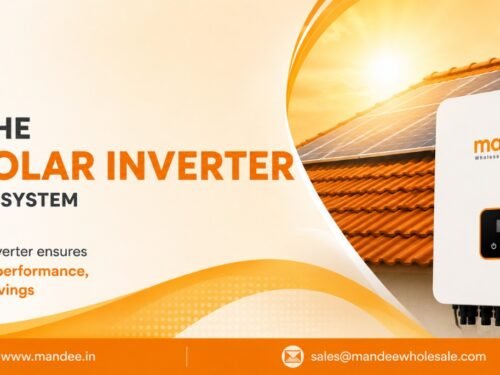
Choosing the right solar inverter supplier in India is an important decision for EPC companies, installers, distributors, commercial buyers and solar businesses. The inverter is one of the most critical components of a solar PV system because it converts the DC electricity generated by solar panels into usable AC electricity.
However, selecting an inverter is only one part of the procurement process. The supplier you choose can also influence product availability, pricing, technical support, warranty handling, delivery timelines and overall project execution.
With multiple manufacturers, distributors, wholesalers and online marketplaces available, how do you identify the right solar inverter supplier in India?
This guide explains what to look for when selecting a solar inverter supplier, how to compare suppliers, what technical factors to consider, and how EPC companies can make smarter procurement decisions.
Quick Answer: How Do You Choose a Solar Inverter Supplier in India?
The right solar inverter supplier India should offer technically suitable products, competitive pricing, reliable availability, proper documentation, warranty support and dependable delivery.
Before finalizing a supplier, compare:
- Inverter technology and application
- Capacity and electrical specifications
- Manufacturer reputation
- Product efficiency
- Warranty and service support
- Certifications and documentation
- Stock availability
- Minimum order quantity
- Bulk pricing
- Delivery capabilities
- After-sales support
- Supplier experience with solar EPC projects
For large projects, don’t select a supplier based on price alone. Technical compatibility, reliability and long-term support should be considered alongside procurement cost.
What is a Solar Inverter?
A solar inverter is an electrical device that converts the DC electricity produced by photovoltaic (PV) modules into AC electricity that can be used by electrical loads or supplied to the grid, depending on the system configuration.
The inverter also performs important functions related to system monitoring, electrical protection and power management.
In a typical solar PV system:
Solar Panels → DC Electricity → Solar Inverter → AC Electricity → Loads/Grid
Because the inverter sits at the center of this energy conversion process, choosing the right equipment and supplier is essential for system performance.
Why Does the Solar Inverter Supplier Matter?
Many buyers focus heavily on the inverter brand and specifications but overlook the supplier.
A capable supplier can make solar procurement considerably easier by providing:
Product Availability
Solar projects often operate according to strict installation schedules. Delays in receiving inverters can affect commissioning timelines.
Competitive Pricing
EPC companies purchasing multiple units may be able to negotiate better commercial terms.
Technical Support
The supplier should be able to provide product specifications and assist with technical questions where appropriate.
Warranty Assistance
A supplier with a clear warranty process can make post-sale support easier.
Delivery Support
For projects spread across India, logistics and delivery capabilities can be important considerations.
Product Documentation
Datasheets, installation documentation, test reports and applicable certification information should be available as required.
Types of Solar Inverters You Can Source in India
Before selecting a solar equipment supplier India, understand which inverter technology your project requires.
1. String Inverters
String inverters are commonly used in residential, commercial and other distributed solar applications.
Multiple solar panels are connected into strings, with the strings connected to the inverter.
They can be suitable where the system design allows effective string-level management.
2. Central Inverters
Central inverters are generally associated with larger solar installations and utility-scale projects.
They can handle substantial amounts of DC power through centralized conversion equipment.
For large EPC projects, factors such as system architecture, site design, serviceability and power requirements need to be evaluated carefully.
3. Microinverters
Microinverters are installed at or close to individual solar modules.
They can offer module-level power conversion and monitoring, making them useful for certain residential or complex rooftop applications.
4. Hybrid Inverters
Hybrid inverters can integrate solar generation with battery storage and the electrical load, depending on the system design.
They are increasingly relevant for applications where energy storage and backup power are important.
How to Choose the Right Solar Inverter Supplier in India
Selecting a supplier requires more than searching for the lowest quotation.
Here are the major factors to evaluate.
1. Check Whether the Supplier Understands Your Application
A supplier serving residential rooftop customers may have a different product portfolio from a supplier focused on large EPC projects.
Before requesting a quotation, identify:
- Project size
- System type
- Rooftop or ground-mounted installation
- Grid-connected or hybrid application
- Required inverter capacity
- Number of inverters
- Site location
- Installation environment
- Project timeline
A good solar products supplier should be able to understand the application before recommending a product.
2. Compare Inverter Specifications
Don’t compare inverters only by their rated capacity.
Important specifications can include:
- Rated AC output
- Maximum DC input voltage
- MPPT voltage range
- Maximum input current
- Number of MPPTs
- Maximum efficiency
- Operating temperature range
- IP protection rating
- Communication interfaces
- Grid compatibility
- Protection features
- Dimensions and weight
The inverter must be compatible with the selected solar modules and the overall electrical system.
3. Evaluate Inverter Efficiency
Efficiency determines how effectively the inverter converts DC power into AC power.
A higher efficiency rating can help reduce conversion losses, but EPC companies should consider the complete operating profile rather than relying on one headline efficiency number.
Compare the manufacturer’s published specifications and evaluate whether the inverter is appropriate for the project’s expected operating conditions.
4. Check MPPT Configuration
Maximum Power Point Tracking (MPPT) helps the inverter extract available power from the PV array under changing operating conditions.
The number of MPPTs and their operating ranges can be particularly important for rooftops with:
- Multiple orientations
- Different roof sections
- Partial shading
- Different string configurations
The inverter should be matched to the actual PV array design.
5. Check Voltage and Current Compatibility
This is one of the most important technical checks.
The inverter’s:
- Maximum DC voltage
- MPPT voltage range
- Maximum DC input current
- Short-circuit current limits
should be compatible with the proposed PV string configuration.
An EPC company should verify these parameters using the actual module electrical specifications and expected site conditions.
6. Evaluate Warranty and Service Support
A solar inverter is expected to operate for many years.
Therefore, warranty terms should be clearly understood before purchase.
Ask the supplier:
- What is the standard warranty period?
- What does the warranty cover?
- Where should warranty claims be raised?
- What is the replacement process?
- Is technical support available?
- Are service centers or authorized service partners available?
- What are the expected response timelines?
Don’t consider warranty merely as a number of years. Understand the actual support process behind it.
7. Verify Product Documentation
A professional solar component supplier should be able to provide relevant product documentation.
Depending on the project, documentation may include:
- Product datasheet
- Installation manual
- Technical specifications
- Applicable test reports
- Warranty documentation
- Compliance information
- Product certificates where applicable
For grid-connected projects, ensure the selected equipment meets the requirements applicable to the specific installation and interconnection.
Solar Inverter Supplier vs Solar Inverter Manufacturer
These terms are often confused.
Manufacturer
The manufacturer designs and produces the inverter.
Supplier
A supplier provides the inverter to the customer and may source products directly from manufacturers or through distribution channels.
Distributor
A distributor typically operates within the manufacturer’s supply chain and supplies products to dealers, EPC companies, installers or other businesses.
Therefore, an EPC company doesn’t necessarily need to purchase directly from the manufacturer.
A reliable solar distributor India or authorized supplier can also be a practical procurement channel.
How EPC Companies Should Evaluate Solar Inverter Suppliers
For EPC companies, supplier evaluation should include both technical and commercial factors.
A simple supplier scorecard can help:
| Evaluation Factor | Importance |
|---|---|
| Technical compatibility | Very High |
| Product quality | Very High |
| Manufacturer reputation | High |
| Warranty | High |
| After-sales service | High |
| Product availability | High |
| Pricing | High |
| Delivery capability | High |
| Documentation | High |
| Technical support | Medium–High |
| Bulk purchasing terms | Medium–High |
This approach helps prevent procurement decisions from being based entirely on price.
Solar Inverter Wholesale for EPC Companies
EPC companies working on multiple projects may need several inverters at once.
Purchasing through solar products wholesale channels can help businesses explore bulk pricing and consolidated procurement.
When evaluating wholesale solar products, compare suppliers based on:
- Unit price
- Quantity discounts
- MOQ
- Stock availability
- Delivery costs
- Payment terms
- Warranty
- Product authenticity
- Technical support
- Replacement process
The lowest unit price isn’t necessarily the lowest total procurement cost.
How to Find the Best Solar Inverter Supplier in India
A practical supplier-selection process can look like this:
Step 1: Define Your Technical Requirement
Prepare a specification sheet covering inverter capacity, voltage, current, MPPT requirements and application.
Step 2: Shortlist Suppliers
Identify manufacturers, distributors, wholesalers and solar products distributors capable of supplying the required inverter.
Step 3: Request Comparable Quotations
Send the same technical specification to every shortlisted supplier.
Step 4: Verify Technical Compliance
Check whether the proposed inverter actually matches your system design.
Step 5: Compare Commercial Terms
Review:
- Product price
- Taxes
- Freight
- Delivery
- Payment terms
- Warranty
Step 6: Check Supplier Credentials
Look at experience, product documentation, support capabilities and references where appropriate.
Step 7: Finalize Based on Total Value
Select the supplier that provides the best combination of technical suitability, quality, price, availability and support.
What Makes a Good Solar Equipment Supplier in India?
A good solar equipment supplier should be more than a seller.
For EPC procurement, look for a supplier that can support multiple categories such as:
- Solar inverters
- Solar panels
- ACDB
- DCDB
- Solar cables
- Connectors
- Mounting structures
- Earthing equipment
- Monitoring equipment
- Other balance-of-system components
This can reduce procurement complexity and help EPC teams manage multiple project requirements.
Solar Component Supplier India: What Should You Look For?
When searching for a solar components supplier India, evaluate whether the supplier provides:
Broad Product Selection
A wider product portfolio can make project procurement easier.
Reliable Supply
Consistent availability is particularly important for EPC projects with fixed deadlines.
Technical Specifications
Products should have clear and verifiable specifications.
Transparent Commercial Terms
The quotation should clearly explain product pricing, taxes, shipping and other applicable costs.
Responsive Communication
Fast communication can help resolve procurement and technical questions during project execution.
How to Get the Best Price from a Solar EPC Material Supplier in India
Many EPC companies search for a solar EPC material supplier best price India when planning procurement.
But getting the “best price” should mean achieving the best overall procurement value, not simply finding the lowest quotation.
Compare these factors:
Product Price + Freight + Taxes + Warranty + Availability + Delivery Time + Support
For large orders, also negotiate:
- Volume discounts
- Project-based pricing
- Delivery schedules
- Payment terms
- Warranty support
- Replacement terms
This approach can help EPC companies make better purchasing decisions.
Can You Buy Solar Inverters Online?
Yes, businesses can research and purchase solar equipment through online B2B marketplaces and supplier platforms.
If you plan to buy solar products online, however, don’t rely only on product photos and listed prices.
Before placing an order, verify:
- Manufacturer
- Exact model number
- Capacity
- Technical specifications
- Warranty
- Seller/supplier details
- Stock availability
- Delivery location
- Applicable documentation
- Return/replacement terms
For bulk EPC procurement, direct supplier communication may still be necessary for project-specific requirements.
Solar Products Wholesale India: What EPC Buyers Should Know
India has a large and diverse solar supply ecosystem, including manufacturers, distributors, dealers, wholesalers and B2B marketplaces.
When sourcing solar products wholesale India, EPC companies should organize procurement around their project bill of materials.
Instead of searching individually for every product, prepare a consolidated requirement covering:
Panels + Inverters + ACDB/DCDB + Cables + Mounting + Connectors + Other Components
This makes supplier comparison more systematic and can create opportunities for consolidated procurement.
Solar Material Supplier India: Build a Reliable Procurement Network
A dependable solar material supplier India can become an important part of an EPC company’s procurement network.
However, EPC companies should avoid relying entirely on a single supplier for every project.
A better approach is to maintain:
- Primary suppliers
- Backup suppliers
- Manufacturer contacts
- Regional distributors
- Wholesale channels
- Online B2B sourcing options
This provides greater flexibility when products are unavailable or project requirements change.
Common Mistakes When Choosing a Solar Inverter Supplier
1. Choosing the Cheapest Supplier
Price is important, but product quality and support are equally important.
2. Ignoring Technical Compatibility
A cheaper inverter is of little value if it doesn’t match the PV system.
3. Not Checking Warranty Terms
Always understand how warranty claims are handled.
4. Buying Without Checking Documentation
Verify specifications and applicable compliance documentation before procurement.
5. Ignoring Delivery Timelines
A delayed inverter can delay commissioning.
6. Not Comparing Multiple Suppliers
Obtain comparable quotations from multiple sources whenever practical.
7. Focusing Only on the Product
The supplier’s service, availability and support can be just as important as the product itself.
Solar Inverter Supplier India: EPC Procurement Checklist
Before finalizing your supplier, use this checklist:
Technical
- Required inverter capacity confirmed
- DC voltage compatibility checked
- MPPT range checked
- Input current checked
- Number of MPPTs confirmed
- AC output specifications checked
- Protection features reviewed
- Communication requirements checked
Supplier
- Supplier credentials reviewed
- Manufacturer/product authenticity verified
- Technical documentation received
- Warranty terms confirmed
- After-sales support evaluated
- Stock availability confirmed
- Delivery timeline confirmed
Commercial
- Unit price compared
- Bulk discount discussed
- Taxes considered
- Freight considered
- Payment terms reviewed
- Replacement terms understood
Frequently Asked Questions
What is a solar inverter supplier?
A solar inverter supplier is a business that supplies solar inverters to EPC companies, installers, distributors, businesses or other customers. The supplier may source products directly from manufacturers or through distribution networks.
How do I choose a solar inverter supplier in India?
Compare the supplier’s product range, technical suitability, pricing, availability, warranty, documentation, delivery capabilities and after-sales support. For EPC projects, technical compatibility should be checked before commercial comparison.
Which solar inverter is best for an EPC project?
There is no single inverter that is best for every EPC project. The appropriate inverter depends on project size, PV configuration, voltage, current, site conditions, grid requirements, system architecture and commercial considerations.
Can EPC companies buy solar inverters wholesale?
Yes. EPC companies can source inverters through manufacturers, distributors, wholesalers and B2B procurement platforms. Bulk purchasing may provide opportunities for project-based pricing.
What should i check before buying a solar inverter?
Check the inverter’s capacity, maximum DC voltage, MPPT range, input current, efficiency, output specifications, protection features, environmental rating, documentation, warranty and compatibility with the PV system.
Is buying solar products online safe?
Online procurement can be useful, but buyers should verify the supplier, product model, technical specifications, warranty, documentation and delivery terms before placing an order.
What is the difference between a solar supplier and distributor?
A supplier is a broad term for a business that supplies solar products, while a distributor generally operates as part of a manufacturer’s distribution network. The exact role can vary by company and market.
How can i get the best price from a solar equipment supplier?
Request comparable quotations, purchase in appropriate quantities, negotiate volume pricing and compare the complete landed cost rather than only the quoted unit price.
Why is after-sales support important for solar inverters?
Inverters are critical electrical equipment. Effective warranty handling, troubleshooting assistance and replacement support can reduce downtime and help EPC companies manage issues after installation.
Final Takeaway
Finding the right solar inverter supplier India is about more than comparing prices.
For EPC companies, the ideal supplier should combine technical product suitability, competitive commercial terms, reliable availability, proper documentation, warranty support and dependable service.
Whether you’re sourcing a single inverter or procuring wholesale solar products for multiple EPC projects, create a clear technical specification first and then compare suppliers on a like-for-like basis.
A reliable solar supplier India can become a valuable long-term procurement partner—not just a source for one product.