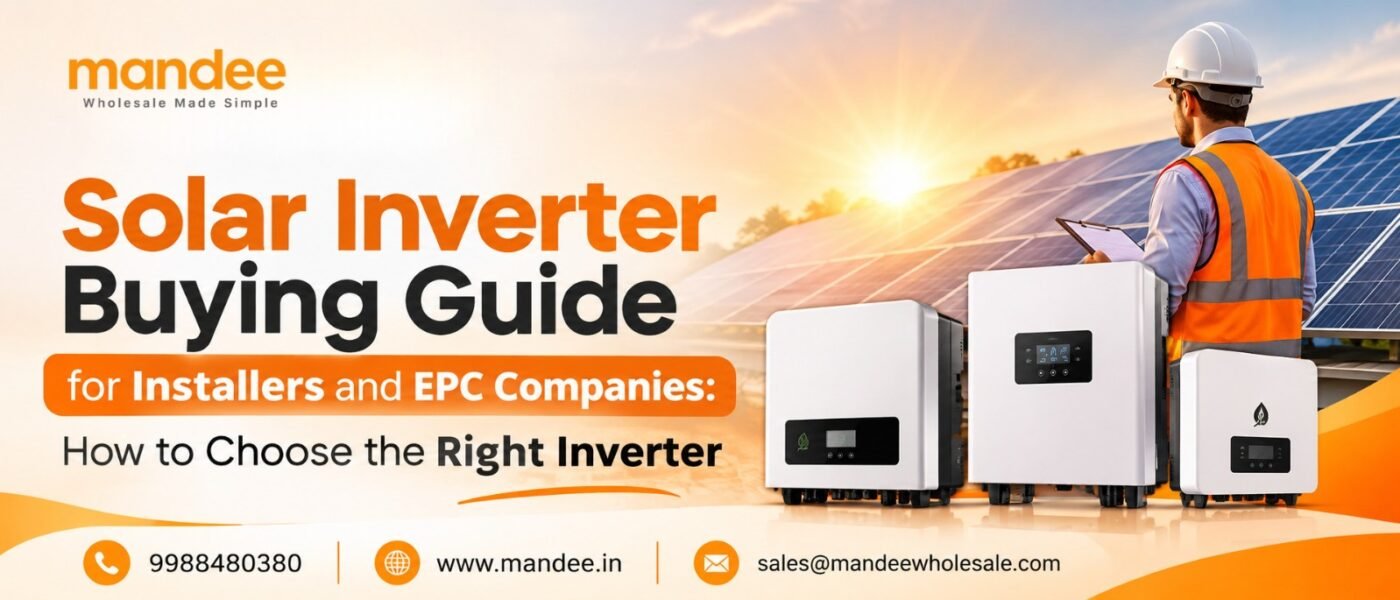
Choosing the right solar inverter is one of the most important decisions when planning a solar installation. While solar panels generate electricity, the inverter converts the generated DC (Direct Current) electricity into AC (Alternating Current) electricity that can be used by homes, commercial buildings, and industrial facilities.
For solar installers and EPC (Engineering, Procurement, and Construction) companies, selecting an appropriate inverter is not just about comparing prices. It involves evaluating system capacity, conversion efficiency, compatibility, safety, warranty, after-sales support, and long-term performance.
With the growing demand for rooftop solar, commercial solar installations, and industrial solar projects across India, the need for reliable solar equipment has also increased. Installers must work with dependable suppliers who can provide quality solar products and components at competitive prices.
This guide explains the different types of solar inverters, important features to consider, common buying mistakes, and practical tips to help installers and EPC companies make informed purchasing decisions.
What is a Solar Inverter and Why is it Important?
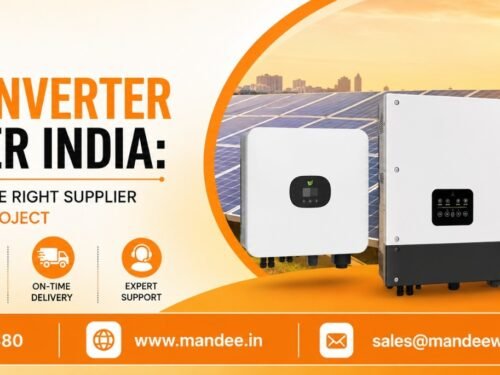
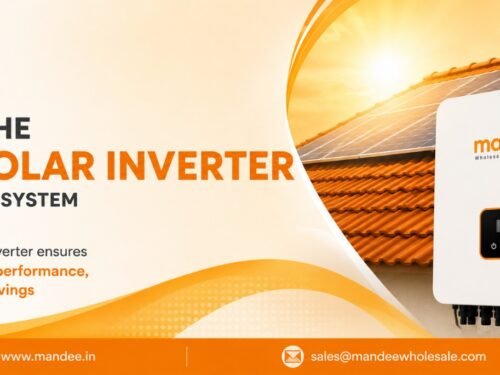
A solar inverter is an electrical device that converts the DC electricity generated by solar panels into AC electricity suitable for electrical appliances, commercial operations, or grid connection.
It also performs important functions such as monitoring system performance, managing power conversion, and providing electrical protection, depending on its design and features.
A solar inverter plays several important roles:
- Converts DC electricity from solar panels into usable AC electricity.
- Helps optimize energy conversion and system performance.
- Monitors electricity generation and operating conditions.
- Supports grid connectivity in grid-tied systems.
- Provides protection against certain electrical faults.
- Enables system monitoring through supported applications or platforms.
For installers and EPC companies, choosing the right inverter helps ensure that the complete solar system operates reliably and meets the project’s technical requirements.
Types of Solar Inverters Used in Solar Installations
Before purchasing solar equipment, installers should understand the major types of solar inverters available in the market. Each type is designed for different applications and project requirements.
1. On-Grid Solar Inverter
An on-grid inverter is designed for solar systems connected to the electricity grid. It converts the DC power generated by solar panels into AC electricity that can be used within the building or exported to the grid, subject to applicable regulations and system configuration.
Best suited for:
- Residential rooftop solar installations.
- Commercial buildings.
- Industrial rooftop solar projects.
- Grid-connected solar power plants.
Key benefits:
- Suitable for grid-connected applications.
- Can support net-metering arrangements where permitted.
- Generally does not require battery storage.
- Offers a practical solution for reducing grid electricity consumption.
An important consideration is that conventional grid-tied inverters usually shut down during a grid outage for safety reasons. They do not automatically provide backup power unless the system has an appropriate backup-capable configuration.
2. Off-Grid Solar Inverter
An off-grid solar inverter is used in solar systems that operate independently of the electricity grid. These systems generally use batteries to store electricity for later consumption.
Best suited for:
- Remote locations.
- Rural installations.
- Areas with unreliable grid supply.
- Independent solar power systems.
Key benefits:
- Supports standalone solar installations.
- Works with compatible battery storage.
- Can provide electricity when grid connectivity is unavailable.
- Offers greater energy independence when appropriately sized.
Installers should check battery voltage, charging compatibility, supported battery chemistry, and load requirements before selecting an off-grid inverter.
3. Hybrid Solar Inverter
A hybrid solar inverter combines solar generation, battery storage, and grid interaction within a suitable system configuration.
Depending on its design, it can manage energy from solar panels, batteries, and the electricity grid.
Best suited for:
- Commercial buildings.
- Residential properties requiring backup.
- Businesses with critical electrical loads.
- Installations focused on energy management.
Key benefits:
- Supports battery integration.
- Can provide backup power through supported backup outputs.
- Offers flexible energy management.
- Can help optimize solar energy utilization.
EPC companies should carefully evaluate backup capacity, battery compatibility, operating modes, and the inverter’s ability to support the required loads.
4. String Solar Inverter
A string inverter connects multiple solar panels arranged in one or more strings to a central inverter.
It is commonly used in residential, commercial, and industrial solar installations.
Key benefits:
- Widely used in rooftop solar projects.
- Suitable for different system capacities.
- Offers centralized monitoring.
- Can provide a practical installation and maintenance arrangement.
However, shading or performance differences between panels connected to the same string can affect overall output, depending on the system design and MPPT configuration.
5. Microinverters
Microinverters are smaller inverters installed at individual solar panels or panel-level groups, depending on the product design.
Instead of converting power at one central inverter, they perform DC-to-AC conversion close to the solar modules.
Key benefits:
- Panel-level monitoring in supported systems.
- Can reduce the impact of certain shading conditions.
- Offers flexibility for complex rooftop layouts.
- Supports module-level power conversion.
Microinverters may have a higher initial equipment cost than conventional string inverter systems, so EPC companies should evaluate the project’s layout and economics before choosing them.
Important Factors to Consider Before Buying a Solar Inverter
Selecting a solar inverter requires more than comparing product prices. The following factors can help installers and EPC companies identify suitable products for their projects.
1. Inverter Capacity and System Size
The inverter capacity should match the project’s solar generation capacity, expected AC output, and load requirements.
For example, a 10 kW rooftop solar project may use an inverter selected according to the system’s DC capacity, expected AC output, module characteristics, and applicable design requirements.
The DC-to-AC ratio should also be evaluated carefully. A properly designed ratio can improve inverter utilization, but excessive DC oversizing may lead to clipping and other performance trade-offs.
Always follow the inverter manufacturer’s design recommendations and applicable project requirements.
2. Conversion Efficiency
Efficiency indicates how effectively an inverter converts DC electricity into AC electricity.
Higher conversion efficiency can help reduce conversion losses, although actual system performance also depends on operating conditions, temperature, loading, and equipment quality.
When comparing inverters, check both maximum efficiency and weighted or European efficiency figures where available.
3. MPPT Technology
MPPT stands for Maximum Power Point Tracking.
It is a technology that helps the inverter extract available power from solar panels under changing sunlight and operating conditions.
Installers should evaluate:
- Number of MPPTs.
- Supported input voltage range.
- Maximum input current.
- Maximum PV input power.
- Compatibility with the selected solar modules.
Multiple MPPT inputs can be especially useful for rooftops with different orientations or varying shading conditions.
4. Grid and Battery Compatibility
Not every inverter supports every solar configuration.
Before purchasing, check whether the inverter is compatible with:
- Grid-connected solar installations.
- Battery storage systems.
- Selected solar panel specifications.
- Existing electrical infrastructure.
- Required backup loads.
- Applicable grid and electrical standards.
For hybrid and off-grid projects, battery compatibility is particularly important.
5. Safety and Protection Features
Electrical safety should be a priority in every solar installation.
Depending on the inverter model, useful protection features may include:
- Overvoltage protection.
- Overcurrent protection.
- Short-circuit protection.
- Overtemperature protection.
- Anti-islanding protection for applicable grid-connected systems.
- Ground fault or insulation monitoring.
- Surge protection provisions.
Installers should verify the actual protection features listed in the manufacturer’s technical documentation rather than assuming every inverter includes the same functions.
6. Warranty and After-Sales Support
An inverter is a critical component of a solar installation. Its warranty and service support can influence the long-term operating experience of the system.
Before buying, evaluate:
- Standard product warranty.
- Availability and terms of extended warranty.
- Service centre coverage.
- Technical support availability.
- Spare parts availability.
- Warranty claim procedures.
For EPC companies managing multiple projects, dependable after-sales support can make a significant difference.
7. Monitoring and Smart Features
Modern solar inverters may include Wi-Fi, Ethernet, monitoring applications, data logging, and remote diagnostics.
These features help installers and system owners monitor energy generation, identify performance issues, and review system operating conditions.
For commercial and industrial installations, monitoring capabilities can be especially useful for managing larger solar assets.
Solar Inverter Buying Checklist for Installers and EPC Companies
Before placing a bulk order, use this checklist to evaluate the product and supplier.
| Evaluation Parameter | What to Check |
|---|---|
| Inverter Type | On-grid, off-grid, hybrid, string, or microinverter |
| Capacity | Suitable for project requirements |
| Efficiency | Maximum and weighted efficiency |
| MPPT | Number and operating range |
| Compatibility | Solar panels, batteries, and grid |
| Protection | Electrical and safety features |
| Certifications | Applicable Indian standards and required approvals |
| Warranty | Coverage, duration, and conditions |
| Monitoring | App, Wi-Fi, and remote monitoring |
| Supplier Support | Technical assistance and service network |
| Pricing | Product cost, taxes, delivery, and warranty terms |
| Availability | Stock and delivery timelines |
This checklist can help EPC companies compare multiple products before finalizing procurement.
How to Choose the Right Solar Products Supplier in India
Selecting the right solar inverter is only one part of successful procurement. Installers also need a dependable source for other solar components required to complete their projects.
A reliable solar products supplier should offer consistent product quality, transparent pricing, technical information, and dependable supply arrangements.
Here are some factors to consider when selecting a supplier.
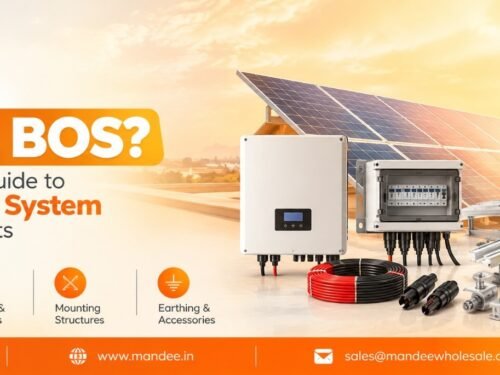
1. Check the Product Range
A supplier with a suitable range of solar equipment can simplify procurement.
Depending on project requirements, EPC companies may need:
- Solar inverters.
- Solar panels.
- Mounting structures.
- DC and AC cables.
- Distribution boxes.
- Connectors.
- Protection devices.
- Earthing materials.
- Battery storage equipment.
Working with an experienced solar component supplier can make it easier to coordinate procurement across different project requirements.
2. Compare Wholesale Pricing
For businesses handling multiple installations, purchasing solar products wholesale can help improve procurement efficiency.
However, the lowest quotation should not automatically determine the buying decision.
Compare the total cost, including:
- Product price.
- Applicable taxes.
- Transportation charges.
- Warranty coverage.
- Technical support.
- Product availability.
- Delivery timelines.
EPC companies looking for solar products wholesale in India should evaluate the overall value rather than focusing only on the quoted unit price.
3. Verify Product Quality and Documentation
Always request product datasheets, warranty documents, applicable certifications, and technical specifications.
For inverters, verify the model-specific compliance requirements relevant to the intended application.
A professional solar equipment supplier in India should be able to provide the necessary product documentation and help clarify technical specifications.
4. Evaluate Bulk Supply Capabilities
Large EPC projects may require significant quantities of solar components within fixed project timelines.
Before finalizing a solar wholesale supplier, check:
- Bulk inventory availability.
- Order fulfilment capacity.
- Delivery coverage.
- Replacement and return policies.
- Coordination for large project orders.
This is particularly important for companies managing multiple installations across different locations.
5. Look for a Supplier with a Wider EPC Product Range
A solar EPC material supplier should understand the different components required for a complete solar installation.
Access to solar components wholesale can simplify purchasing and reduce the effort involved in coordinating with multiple vendors.
Whether you need a single inverter or complete solar installation materials, choosing an organized procurement partner can support smoother project execution.
Why Solar EPC Companies Should Plan Their Procurement Carefully
For EPC companies, procurement decisions directly influence project costs, installation schedules, and customer satisfaction.
An unreliable supplier or unsuitable inverter can result in project delays, compatibility issues, additional expenses, and maintenance challenges.
A well-planned procurement strategy should focus on:
Technical compatibility: Ensure that all components work together as intended.
Cost management: Compare quotations and evaluate the total procurement cost.
Supplier reliability: Work with suppliers who offer clear documentation and dependable communication.
Inventory planning: Maintain visibility into product availability and expected delivery schedules.
Quality assurance: Verify the specifications and condition of products before installation.
Companies looking for a solar EPC material supplier in India should prioritize technical suitability and supply reliability alongside competitive pricing.
Common Mistakes to Avoid When Buying Solar Inverters
Even experienced installers can face procurement challenges when important technical details are overlooked.
Avoid these common mistakes:
- Choosing only by price: A cheaper inverter may not provide the required features, warranty, or service support.
- Ignoring compatibility: Incorrect voltage, current, or battery compatibility can create system design problems.
- Overlooking MPPT requirements: Insufficient MPPT flexibility may affect performance on complex rooftops.
- Ignoring warranty conditions: Understand what is covered and how claims are handled.
- Not checking certifications: Verify the approvals and compliance applicable to the intended installation.
- Ignoring after-sales service: Limited technical support can make troubleshooting difficult.
- Poor procurement planning: Delayed deliveries can affect installation schedules and project commitments.
Avoiding these mistakes helps EPC companies make better purchasing decisions and manage project risks.
Where to Buy Solar Inverters and EPC Materials in India?
Installers, contractors, and EPC companies should look for a dependable supplier that understands their procurement requirements.
Whether you are searching for a solar material supplier in India, a solar products distributor, or a solar component supplier in India, compare suppliers based on product availability, pricing, documentation, quality, and service support.
For businesses planning bulk purchases, a supplier offering wholesale solar products and a wider range of solar EPC materials can make procurement more convenient.
If you are looking to buy solar products online, review the product specifications, supplier credentials, warranty terms, and delivery details before confirming your order.
Explore Mandee for solar product procurement and discover solutions for your solar installation and EPC material requirements.
Conclusion
Buying the right solar inverter is essential for building an efficient, reliable, and well-designed solar power system.
For installers and EPC companies, the purchasing decision should consider inverter capacity, conversion efficiency, MPPT technology, compatibility, safety features, warranty, and after-sales support.
Equally important is choosing a reliable supplier who can provide quality solar products, competitive wholesale pricing, and dependable delivery.
As India’s solar market continues to expand, organized procurement and informed equipment selection will help solar businesses manage projects more effectively.
Whether you are planning residential rooftop installations, commercial solar projects, or industrial solar systems, investing time in selecting the right inverter and procurement partner can support better project outcomes.
Looking for a dependable solar products supplier in India? Explore Mandee and simplify your solar procurement requirements.
Frequently Asked Questions (FAQs)
1. Which type of solar inverter is best for EPC companies?
The best inverter depends on the project. On-grid inverters are suitable for grid-connected installations, off-grid inverters for independent systems, and hybrid inverters for projects requiring battery integration and suitable backup functionality.
2. How do I choose the right solar inverter capacity?
Consider the total solar panel capacity, DC-to-AC ratio, expected AC output, load requirements, module specifications, and inverter input limits. Follow the manufacturer’s system design guidelines.
3. What is the difference between an on-grid and hybrid solar inverter?
An on-grid inverter converts solar electricity for a grid-connected system. A hybrid inverter can manage solar generation, battery storage, and grid interaction, depending on its configuration.
4. What is MPPT in a solar inverter?
MPPT stands for Maximum Power Point Tracking. It helps a solar inverter extract the available power from solar panels under changing sunlight and operating conditions.
5. What should installers check before buying solar inverters in bulk?
Installers should evaluate inverter capacity, efficiency, MPPT specifications, compatibility, certifications, warranty, service support, pricing, inventory, and delivery timelines.
6. How can EPC companies find a reliable solar equipment supplier in India?
Compare product range, technical documentation, product quality, wholesale pricing, stock availability, delivery capacity, warranty support, and supplier credibility before making a purchase.
7. Why is inverter efficiency important in solar installations?
Inverter efficiency indicates how effectively DC electricity is converted into AC electricity. Better conversion efficiency can reduce energy losses, although actual performance depends on operating conditions.
8. Can solar inverters work without batteries?
Yes. Most conventional on-grid solar inverters operate without batteries. Off-grid systems generally require batteries, while hybrid inverters may operate with or without battery storage depending on the model and configuration.
9. Where can EPC companies buy solar products wholesale in India?
EPC companies can source solar products from manufacturers, authorized distributors, and established wholesale suppliers. They should compare pricing, specifications, documentation, warranty, and supply reliability.
10. What other solar components are required besides an inverter?
A typical solar installation may require solar modules, mounting structures, DC and AC cables, connectors, distribution boxes, protection devices, earthing materials, and monitoring equipment. The exact requirements depend on the system design and applicable standards.
11. Is it possible to buy solar products online in India?
Yes. Solar installers, contractors, and businesses can explore online supplier catalogues and procurement platforms. Before purchasing, verify specifications, seller credentials, product availability, warranty, and delivery terms.
12. Why should EPC companies work with a dedicated solar EPC material supplier?
A dedicated supplier can help EPC companies coordinate procurement, compare components, manage bulk orders, and access technical product information. Supplier capabilities should be verified before entering into a procurement arrangement.