Introduction
When people talk about a solar power system, solar panels are usually the first thing that comes to mind. However, panels are only one part of a complete solar installation.
A working solar PV system requires several other electrical, structural, and safety components. Together, these components are known as the Balance of System (BOS).
Whether you are developing a rooftop solar project, commercial installation, utility-scale plant, or industrial solar system, selecting the right BOS components can have a major impact on system safety, efficiency, reliability, installation quality, and long-term maintenance.
This is why EPC companies and installers need a dependable solar products supplier, solar equipment supplier, or solar component supplier that can provide compatible products for the complete project.
In this guide, we explain what solar BOS means, its major components, why it matters, and how businesses can source BOS materials in India.
What is Solar BOS?
Solar BOS, or Solar Balance of System, refers to all the components of a solar PV system other than the solar panels.
These components enable the solar panels to function as part of a complete electricity-generating system.
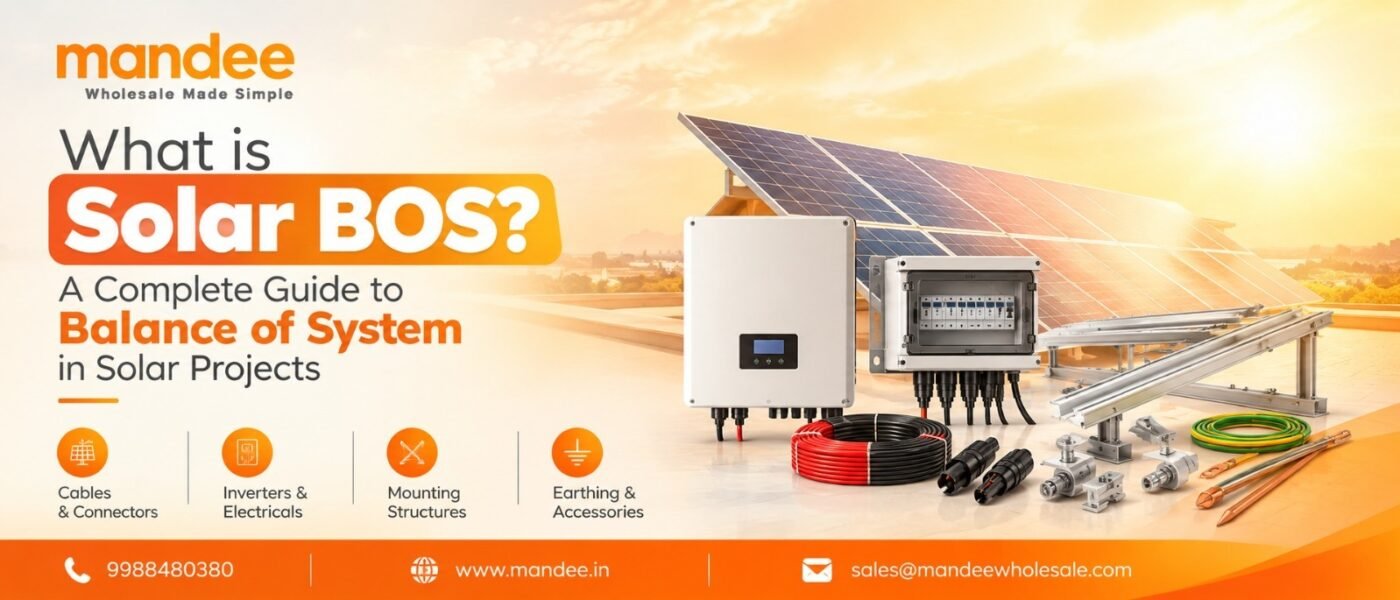
Solar BOS (Balance of System) refers to all the components required to install, connect, operate, protect, and maintain a solar PV system apart from the solar panels themselves. BOS can include inverters, mounting structures, cables, connectors, combiner boxes, ACDB/DCDB, earthing systems, protection devices, monitoring equipment, and other electrical and structural components.
In simple terms: Solar panels generate electricity, while the BOS components help that electricity reach the required destination safely and efficiently.
Depending on the type and size of the project, BOS may include:
- Solar inverters
- Mounting structures
- DC and AC cables
- MC4 or compatible connectors
- DCDB and ACDB
- Combiner boxes
- Earthing and lightning protection systems
- Fuses and circuit breakers
- Surge protection devices
- Monitoring systems
- Cable trays and conduits
- Junction boxes
- Electrical protection equipment
- Fasteners and installation accessories
The exact BOS requirement depends on the system design, project capacity, installation location, voltage requirements, applicable standards, and whether the project is residential, commercial, industrial, or utility-scale.
Why is Solar BOS Important?
Solar panels alone cannot deliver usable electricity to a building or electrical grid.
The BOS components create the connection between power generation, power conversion, protection, distribution, and consumption.
A properly designed BOS system can help with:
1. Electrical Safety
Protection equipment such as DCDB, ACDB, fuses, circuit breakers, and surge protection devices helps protect the system against electrical faults and abnormal conditions.
2. Power Conversion
Solar panels produce DC electricity. An inverter converts this electricity into AC power that can be used by electrical loads or supplied to the grid.
3. Structural Stability
Mounting structures securely hold solar modules in position and help them withstand environmental conditions such as wind and weather exposure.
4. Efficient Power Transmission
Properly selected cables, connectors, and electrical components help minimize unnecessary power losses between different parts of the solar system.
5. Easier Maintenance
Well-organized BOS components make inspection, troubleshooting, maintenance, and replacement easier.
What Are the Main Solar BOS Components?
Solar BOS components can broadly be divided into electrical, structural, protection, monitoring, and installation components.
1. Solar Inverter
The inverter is one of the most important BOS components.
Solar panels generate direct current (DC), while most buildings and electrical grids operate using alternating current (AC). The inverter converts DC electricity into AC electricity.
Common inverter types include:
- String inverters
- Central inverters
- Microinverters
- Hybrid inverters
The right inverter depends on project capacity, system design, application, and grid requirements.
2. Mounting Structures
Mounting structures provide mechanical support for solar panels.
They can be designed for:
- Rooftop installations
- Ground-mounted systems
- Commercial and industrial roofs
- Utility-scale solar plants
- Specialized installations
Structures may use materials such as galvanized steel or aluminum depending on project requirements.
A properly designed mounting structure needs to account for factors such as wind loads, roof conditions, module dimensions, installation angle, and corrosion resistance.
3. Solar DC Cables
DC cables carry electricity from the solar modules to the inverter or other DC-side equipment.
Solar cables need to be selected according to factors such as:
- Current capacity
- Voltage rating
- Temperature conditions
- Cable length
- Installation environment
- Applicable standards
Using inappropriate cables can increase power losses and create safety concerns.
4. Solar Connectors
Connectors provide secure electrical connections between solar modules, cables, and other components.
MC4-type connectors are commonly used in solar installations.
The connectors should be compatible with the cables and other system components. Mixing incompatible connectors can create connection problems and potential safety risks.
5. DCDB
A DC Distribution Box (DCDB) is installed on the DC side of the solar system.
Depending on the system design, a DCDB may contain components such as:
- DC fuses
- DC isolators
- Surge protection devices
- Other protection components
It helps provide protection and isolation for the DC side of the system.
6. ACDB
An AC Distribution Box (ACDB) is used on the AC side of the solar system.
It can contain protection and switching components such as:
- Circuit breakers
- Isolators
- Surge protection devices
- Protection equipment
The ACDB helps connect the inverter output to the building’s electrical system or grid connection point.
7. Earthing System
Earthing is an important part of solar system safety.
A suitable earthing arrangement can help provide a safe path for fault currents and support protection against electrical hazards.
The exact earthing design should be based on the project design, applicable electrical requirements, and local standards.
8. Lightning Protection
Solar installations, particularly large rooftop and ground-mounted projects, may require appropriate lightning protection depending on the site and system design.
Lightning protection can include:
- Lightning protection systems
- Surge protection devices
- Earthing arrangements
- Related protection components
The design should be carried out according to the project’s risk assessment and applicable standards.
9. Cable Management Components
A solar installation requires more than just cables.
Cable management products may include:
- Cable trays
- Cable ties
- Conduits
- Clamps
- Cable glands
- Junction boxes
- Cable clips
Good cable management helps keep the installation organized and can make inspection and maintenance easier.
10. Solar Monitoring System
Monitoring equipment allows system owners and operators to track solar generation and system performance.
Depending on the system, monitoring may provide information about:
- Energy generation
- Inverter performance
- System faults
- Voltage
- Current
- Performance trends
Monitoring can help identify issues before they significantly affect system performance.
Solar BOS vs Solar Panels: What’s the Difference?
The easiest way to understand the difference is:
Solar panels generate electricity. Solar BOS enables that electricity to be converted, transmitted, protected, mounted, monitored, and delivered for use.
| Solar Panels | Solar BOS |
|---|---|
| Generate DC electricity | Supports the complete solar system |
| Main generation component | Supporting electrical and structural components |
| Installed as modules | Includes multiple components |
| Directly exposed to sunlight | Includes electrical, structural and protection equipment |
| One major component category | Broad group of system components |
A complete solar project therefore requires both solar modules and suitable BOS components.
What Factors Affect Solar BOS Cost?
Solar BOS cost can vary significantly between projects.
Some major factors include:
Project Size
A residential rooftop system and a large utility-scale plant will have very different BOS requirements.
System Design
String, central, hybrid, and other system configurations require different components.
Equipment Specifications
Higher-rated cables, protection equipment, mounting systems, and electrical components may increase project costs.
Installation Location
Rooftop, ground-mounted, industrial, and commercial installations have different structural and electrical requirements.
Quality and Standards
Choosing components based solely on the lowest price may not be appropriate for a long-term solar project. Product quality, compatibility, certifications, specifications, and reliability should also be considered.
Quantity
Bulk procurement can affect pricing, particularly when an EPC company needs solar products wholesale for multiple projects.
How to Choose the Right Solar BOS Supplier?
Selecting the right supplier is important because BOS involves many interconnected components.
When evaluating a solar equipment supplier India or solar component supplier India, consider the following:
1. Product Range
A supplier offering multiple categories can simplify procurement.
Look for suppliers that can provide:
- Solar cables
- Mounting structures
- DCDB/ACDB
- Connectors
- Inverters
- Protection equipment
- Earthing components
- Other EPC materials
2. Product Compatibility
Components should be compatible with the overall solar system design.
3. Product Quality
Evaluate technical specifications, certifications, warranties, manufacturer information, and applicable standards.
4. Availability
Project delays can occur when essential materials are unavailable.
A reliable solar products supplier should have a dependable supply chain and inventory management system.
5. Bulk Supply Capability
EPC companies may require large quantities of materials.
A solar wholesale supplier can be useful for contractors and installers handling multiple projects.
6. Technical Support
A supplier that understands solar applications can help customers select suitable components based on project requirements.
Solar Products Wholesale in India: What Should EPC Companies Look For?
For large projects, purchasing individual components from multiple suppliers can increase procurement complexity.
EPC companies may instead work with a solar products wholesale India supplier that can provide multiple categories of materials.
A good wholesale supplier should ideally offer:
- Competitive pricing
- Consistent product availability
- Bulk order support
- Product documentation
- Technical specifications
- Reliable delivery
- Warranty support
- Quality assurance
For EPC contractors, a solar EPC material supplier India can help streamline procurement by supplying multiple materials required for project execution.
How to Buy Wholesale Solar Products?
Businesses looking to buy solar products online or source materials in bulk should evaluate suppliers carefully before placing an order.
A practical procurement process is:
Step 1: Define Project Requirements
Identify system capacity, project type, installation location, and required components.
Step 2: Prepare a BOM
Create a Bill of Materials (BOM) listing the required products, quantities, specifications, and technical requirements.
Step 3: Compare Suppliers
Compare multiple suppliers based on:
- Price
- Product quality
- Availability
- Warranty
- Delivery
- Technical support
Step 4: Verify Specifications
Make sure the products meet the technical requirements of the project.
Step 5: Request a Quotation
For bulk procurement, request a detailed quotation covering product specifications, quantity, taxes, transportation, warranty, and delivery timelines.
Step 6: Confirm Compatibility
Before purchasing, ensure the components work together within the planned system design.
Solar BOS Procurement Checklist
Before placing an order with a solar material supplier India, use this checklist:
| Requirement | What to Check |
|---|---|
| Product specifications | Voltage, current, rating, dimensions |
| Compatibility | System and component compatibility |
| Quality | Manufacturer and product quality |
| Certifications | Applicable certifications/standards |
| Warranty | Warranty terms and coverage |
| Quantity | Project BOM requirements |
| Availability | Current stock and lead time |
| Pricing | Bulk/project pricing |
| Delivery | Location and delivery schedule |
| Support | Technical and after-sales support |
Solar Distributor vs Solar Supplier: What’s the Difference?
The terms solar distributor and solar supplier are often used interchangeably, but they can represent different roles in the supply chain.
A solar distributor typically distributes products from manufacturers to dealers, EPC companies, installers, and other businesses.
A solar supplier may supply products directly to customers, contractors, EPC companies, or distributors.
For businesses, the important factor is not just the label but whether the supplier can provide:
- Genuine products
- Reliable availability
- Competitive pricing
- Technical support
- Timely delivery
- Appropriate documentation
For companies looking for a solar distributor India or solar products distributor, these factors should be evaluated before finalizing a procurement partner.
Common Mistakes When Buying Solar BOS Components
Buying Only on Price
The cheapest product is not necessarily the most suitable product for a solar installation.
Ignoring Compatibility
Components must work together as part of the overall system.
Underestimating Cable Requirements
Cable sizing and installation are important for system performance and safety.
Ignoring Protection Equipment
Protection devices should be considered an essential part of system design rather than an optional expense.
Not Checking Warranty
Always understand warranty terms before purchasing electrical and structural components.
Choosing an Unreliable Supplier
Delayed materials can affect project timelines and installation schedules.
Why Solar BOS Matters for Solar Projects in India
India’s growing solar market includes residential rooftops, commercial and industrial installations, agricultural applications, and large utility-scale projects.
As solar deployment grows, demand is also increasing for reliable solar products, solar equipment, and solar components.
For EPC companies and installers, efficient procurement of BOS materials can contribute to smoother project execution.
This makes the role of a dependable solar products supplier India, solar material supplier India, or solar EPC material supplier India increasingly important.
Frequently Asked Questions About Solar BOS
What does BOS mean in solar?
BOS means Balance of System. It refers to the components required for a solar PV system apart from the solar panels themselves.
What are examples of solar BOS components?
Common examples include inverters, mounting structures, DC and AC cables, connectors, DCDB, ACDB, protection devices, earthing systems, cable management equipment, and monitoring systems.
Is an inverter part of solar BOS?
Yes. In a typical PV system, the inverter is considered a BOS component because it is not part of the solar module itself.
Are mounting structures part of BOS?
Yes. Mounting structures are generally considered part of the Balance of System because they support and secure the solar modules.
Why is solar BOS important?
Solar BOS components enable the system to safely convert, transmit, protect, distribute, and monitor the electricity generated by solar panels.
How much does solar BOS cost?
There is no single BOS price because costs depend on project size, system design, equipment specifications, installation type, and component quality.
Where can I buy solar BOS components in India?
Businesses can source BOS components from manufacturers, distributors, wholesalers, and specialized solar equipment suppliers or solar EPC material suppliers in India.
Can I buy solar products online?
Yes, many solar products can be sourced online. However, for commercial or EPC projects, buyers should verify product specifications, compatibility, certifications, warranty, quantity, and supplier credibility before purchasing.
What should EPC companies consider when choosing a BOS supplier?
EPC companies should consider product range, quality, availability, pricing, technical support, warranty, delivery capabilities, and the supplier’s ability to handle bulk project requirements.
Conclusion
Solar BOS is the backbone that turns solar panels into a complete, functional power system.
From inverters and mounting structures to cables, connectors, distribution boxes, protection equipment, earthing, and monitoring systems, every BOS component has a role in the safe and efficient operation of a solar project.
For EPC companies, installers, distributors, and businesses, choosing the right solar products supplier, solar component supplier, or solar EPC material supplier can simplify procurement and support smoother project execution.
Whether you need solar products wholesale, solar components wholesale, or project-specific EPC materials, focus on the right combination of quality, compatibility, availability, technical specifications, pricing, and after-sales support rather than choosing solely on cost.