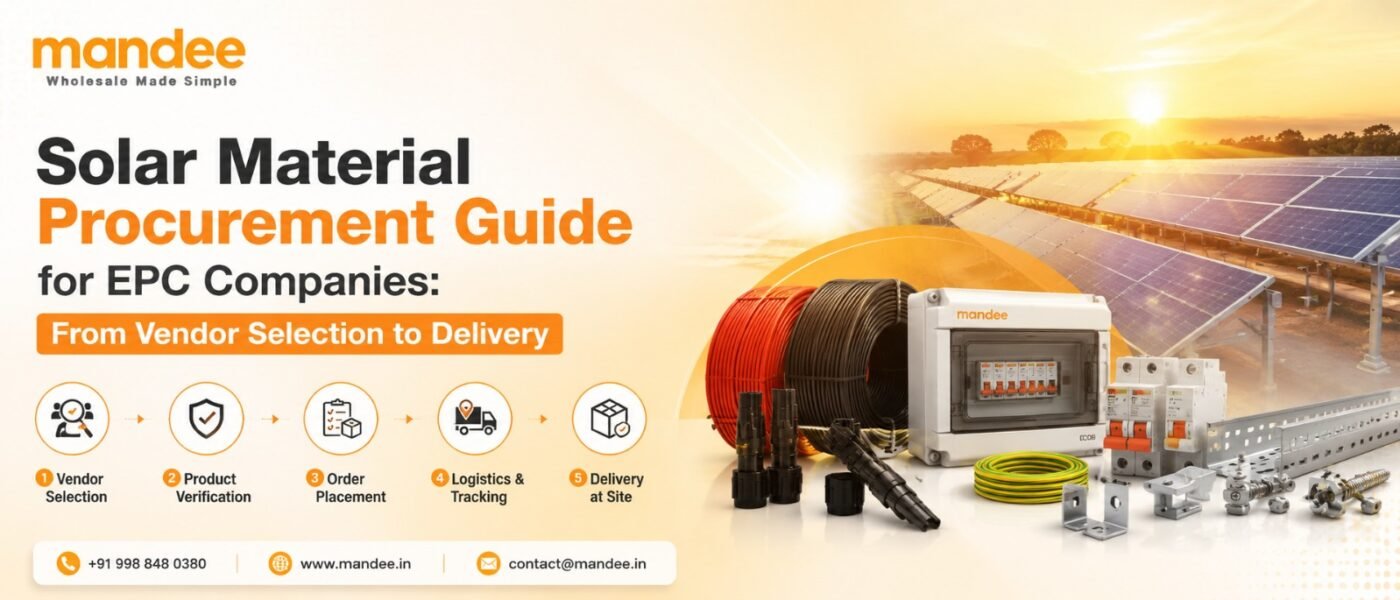
Solar material procurement for EPC companies plays a critical role in determining the success, profitability, and execution speed of any solar project. In fast-growing markets like Odisha, especially Berhampur and Ganjam, EPC contractors must adopt smart procurement strategies to stay competitive and maintain margins.
If you are an EPC company looking to streamline your procurement process, reduce costs, and ensure timely project delivery, this complete guide will walk you through everything—from vendor selection to final delivery.
Why Solar Material Procurement Matters for EPC Companies
Procurement is not just purchasing—it directly impacts:
- Project cost
- Timeline execution
- System efficiency
- Profit margins
In fact, over 65% of solar project cost comes from materials. That’s why optimizing procurement is essential.
👉 If you haven’t read it yet, check our detailed guide on
👉 solar project cost reduction for EPC companies (internal link to your previous blog)
Step 1: Define Project Requirements Clearly
Before contacting any supplier, EPC companies must define:
- Project size (kW / MW)
- Type (residential / commercial / industrial)
- Required components:
- Solar panels
- Inverters
- AC/DC cables
- Mounting structures
- BOS components
👉 Clear planning avoids over-purchasing and reduces wastage.
Step 2: Smart Vendor Selection Strategy
Choosing the right supplier is the most critical step.
✅ What to Look For:
- Experience in large solar projects
- Product quality certifications
- Competitive bulk pricing
- Reliable delivery timelines
- After-sales support
👉 Working with a trusted solar supplier in Odisha ensures better coordination and faster execution.
Step 3: Bulk Procurement Planning
Bulk buying is one of the best ways to reduce cost.
Benefits:
- Lower per-unit price
- Reduced logistics cost
- Better negotiation power
👉 Partnering with a solar panel dealer in Berhampur or a bulk solar supplier for contractors helps EPC companies secure better margins.
Step 4: Optimize Component Selection
Not all components should be selected based on price alone.
Key Considerations:
- Panel efficiency vs cost
- Inverter reliability
- Cable durability (AC/DC cables)
- BOS optimization
👉 A professional solar company in Berhampur can guide EPC companies in choosing the right combination.
Step 5: Procurement Timeline Planning
Delays in procurement = delays in project delivery.
Best Practices:
- Order materials in phases
- Maintain buffer stock
- Avoid last-minute purchases
👉 This is especially important for projects in solar installation Ganjam region where logistics can impact timelines.
Step 6: Logistics & Delivery Management
Efficient delivery is as important as procurement.
Tips:
- Choose suppliers with strong logistics network
- Prefer local suppliers to reduce delivery time
- Track shipments regularly
👉 Working with a solar installer Brahmapur Odisha or local supplier ensures faster delivery.
Step 7: Inventory & Storage Management
Poor inventory planning can lead to:
- Material damage
- Project delays
- Cost overruns
Smart Approach:
- Use inventory tracking systems
- Store materials safely
- Plan usage in advance
Step 8: Cost Optimization Strategies
EPC companies can reduce costs by:
- Bulk purchasing
- Vendor negotiation
- Logistics optimization
- BOS standardization
👉 Combining these strategies can significantly improve profitability.
Step 9: Build Long-Term Supplier Partnerships
Instead of changing vendors frequently:
👉 Build long-term relationships
Benefits:
- Better pricing
- Priority delivery
- Consistent quality
- Credit support
Step 10: Use a B2B Solar Procurement Platform
Modern EPC companies are shifting to structured procurement platforms.
Why?
- Access to multiple products
- Transparent pricing
- Reliable supply chain
- Faster execution
👉 Platforms like Mandee act as a solar inventory supplier for large projects, helping EPC companies scale efficiently.
How Smart Procurement Improves Project Success
With the right procurement strategy, EPC companies can:
- Reduce project cost by 15–20%
- Improve delivery timelines
- Ensure better system performance
- Increase profit margins
Conclusion
Solar material procurement for EPC companies is not just an operational task—it’s a strategic advantage.
From vendor selection to final delivery, every step plays a role in determining project success. By adopting smart procurement strategies, EPC companies in Odisha—especially in Berhampur and Ganjam—can significantly improve efficiency, reduce costs, and scale faster.